Puppy Potty Training Schedule by Age (2026 Guide)
Primary keyword "puppy potty training schedule" was chosen over the broader "puppy potty training" because the broad term is extremely high-competition with major sites (AKC, Rover, Sniffspot) already ranking. The schedule/age-specific angle is a more winnable long-tail variation with strong search intent from new puppy owners searching for a concrete timeline.
Puppy Potty Training Schedule by Age — What to Actually Expect
"How long is this going to take?" is the question every new puppy owner asks by week two of house-training. The honest answer: most puppies take four to six months to be fully potty trained, though some take up to a year to reach total consistency — and that's completely normal. Small breeds tend to take longer since they have smaller bladders and faster metabolisms than large breeds.
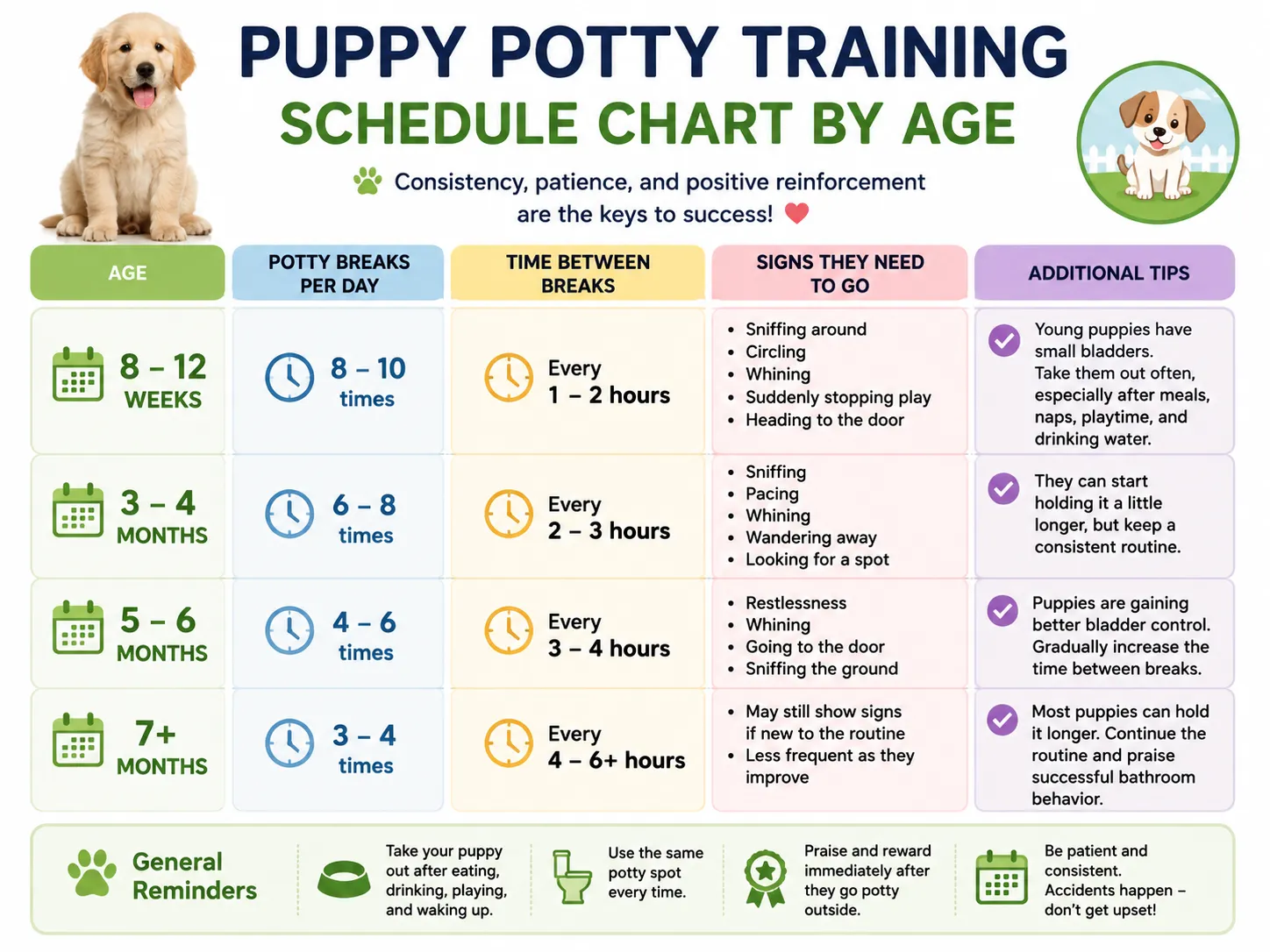
The good news is that potty training becomes far more predictable once you understand your puppy's actual bladder limits by age, and follow a consistent daily rhythm instead of guessing. Here's the real, age-by-age potty training schedule vets and certified trainers recommend.
The "Eat, Play, Sleep, Potty" Cycle
Successful house-training almost always comes down to one simple, repeatable cycle: your puppy eats, plays, sleeps, and then needs to potty — in a predictable loop throughout the day. The moments that matter most:
- First thing in the morning, immediately after waking — no coffee, no phone check, straight outside
- Within 15 minutes of eating or drinking a significant amount
- Immediately after naps — puppies almost always need to go the second they wake up
- After high-energy play — a vigorous play session stimulates digestion and almost always ends in a needed potty break
- Right before bed
Step-by-Step Potty Training Method
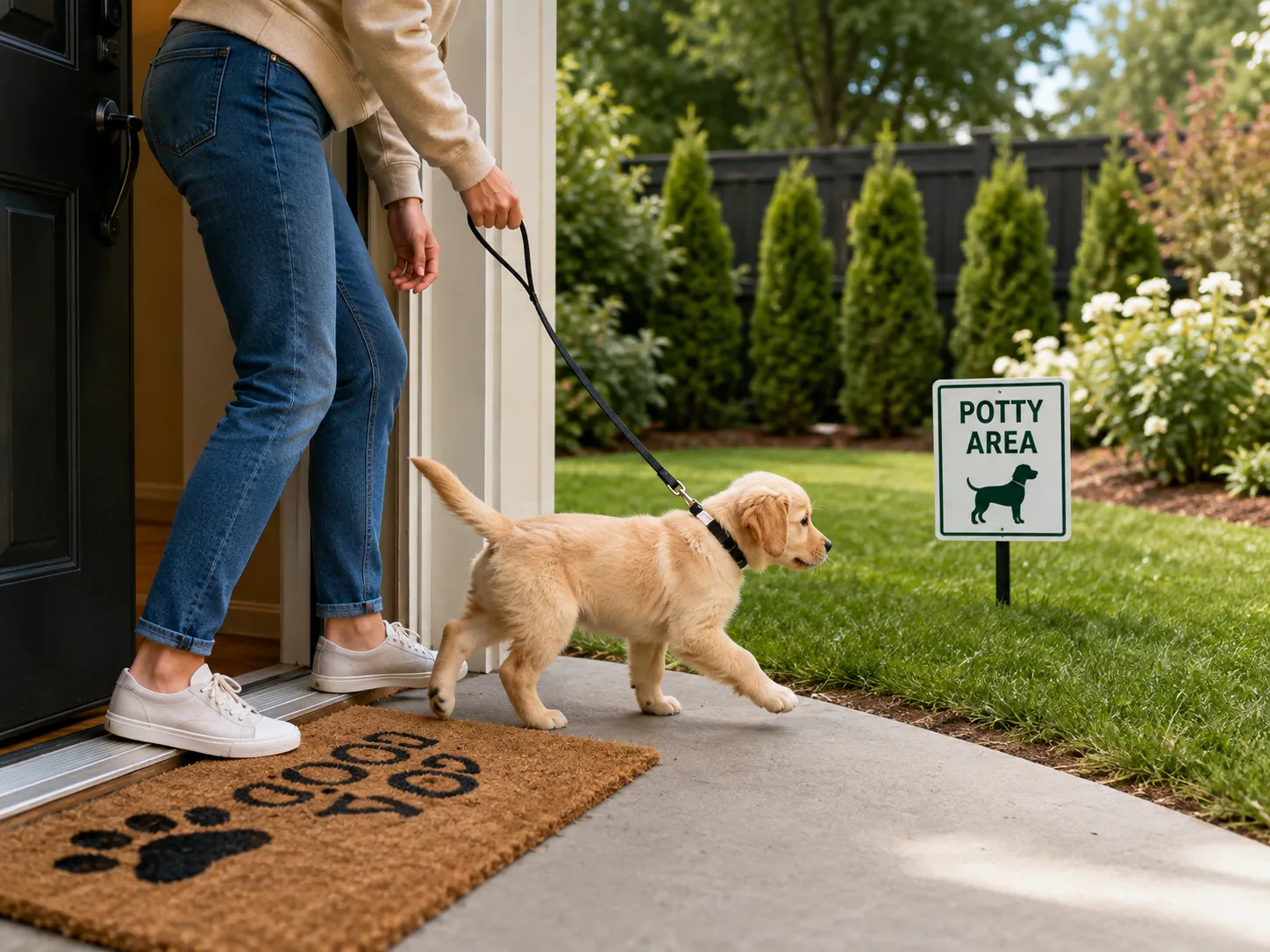
1. Pick One Spot and Stick With It Always take your puppy to the same outdoor spot. The scent left behind reinforces the message that this is where potty happens.
2. Stay Outside, Stay Boring Keep your puppy on a leash outside, even in a fenced yard, so you're right there to react the moment they go. Keep the moment low-stimulation until they've actually gone, then reward with play or a walk.
3. Reward Immediately The instant your puppy finishes, celebrate with a treat and enthusiastic praise. Timing matters — reward within seconds, not minutes, so the connection is clear.
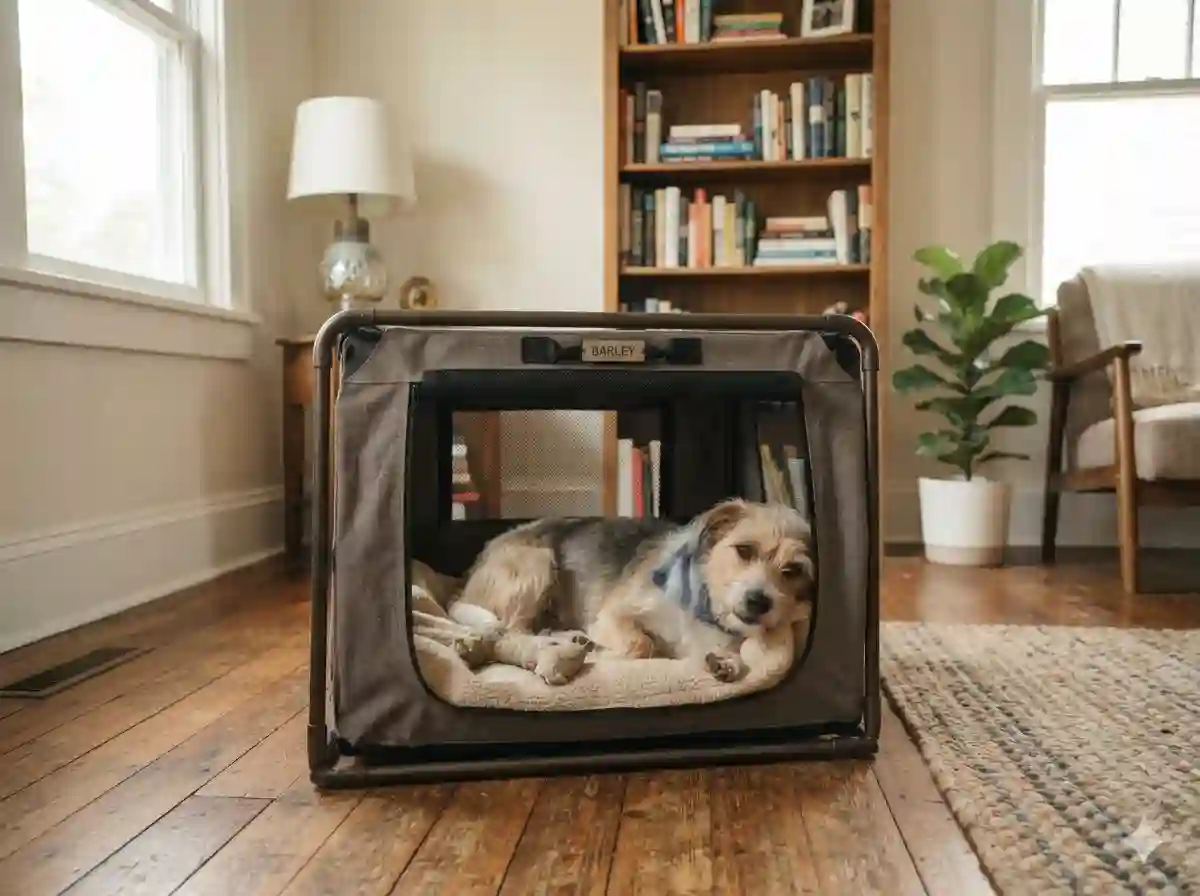
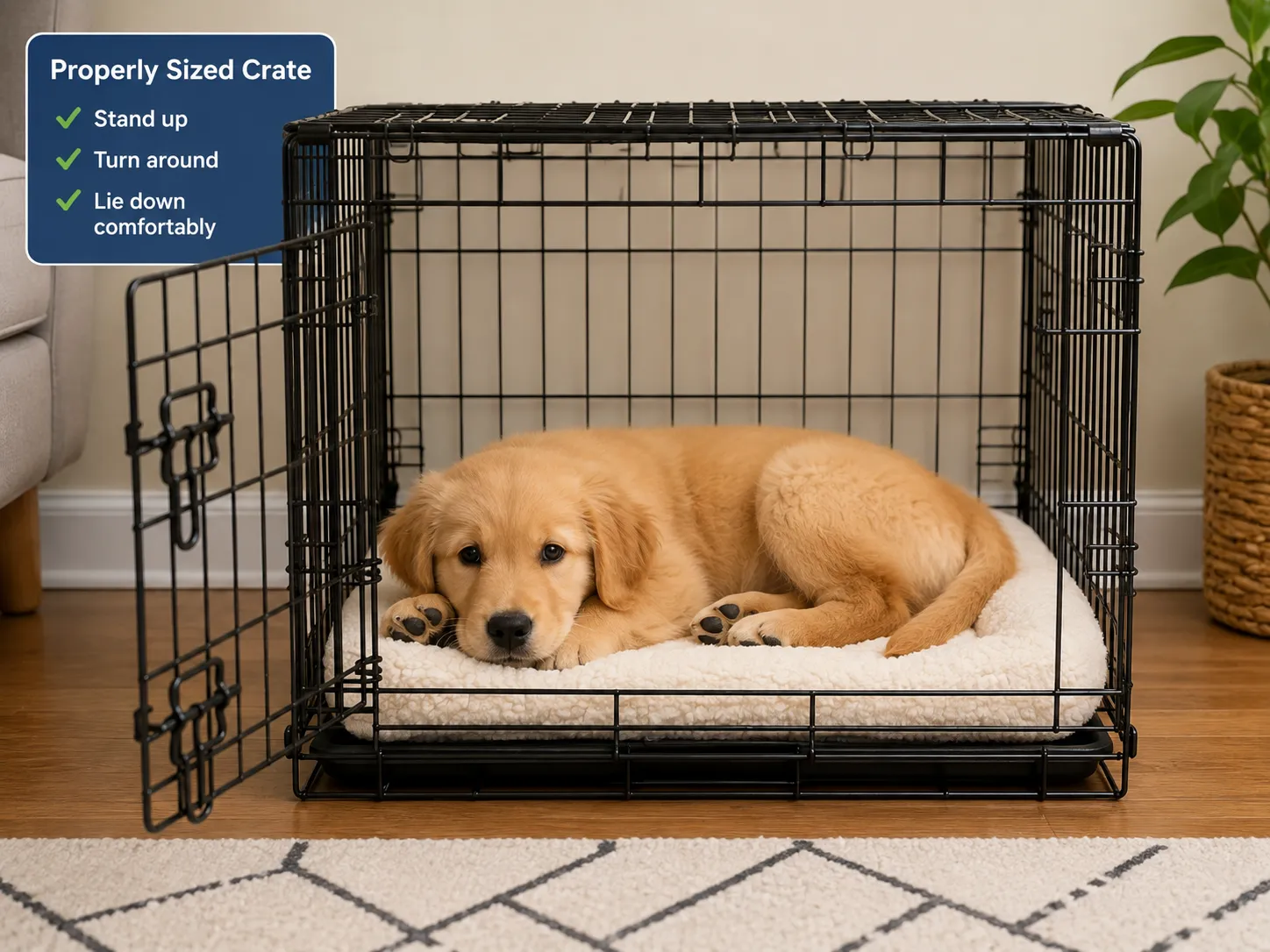
4. Use Crate Training as a Support Tool Dogs naturally avoid soiling their own sleeping space, which makes a properly sized crate one of the most effective potty-training tools available. It should be just big enough to stand, turn around, and lie down in — too much extra space defeats the purpose. ✅ Shop Now — Puppy Training Crate
5. Supervise Constantly, or Use a Tether Unsupervised puppies see an empty room as a safe place to go. Using a leash to keep your puppy near you indoors (sometimes called the "umbilical cord" method) prevents them from sneaking off to have an accident out of sight.
6. Clean Accidents With an Enzymatic Cleaner Regular cleaners don't fully remove the scent markers that draw puppies back to the same accident spot. An enzymatic cleaner breaks down the odor at a molecular level, which meaningfully reduces repeat accidents in the same place. ✅ Shop Now — Enzymatic Pet Odor Remover
7. Never Punish After the Fact If you find an accident after the fact, it's too late for your puppy to connect punishment to the behavior. Rubbing their nose in it or scolding them doesn't work and can create fear or anxiety around elimination in general.
Common Setbacks (and What They Actually Mean)
- Sudden increase in accidents → Often a growth spurt, stress, a routine change, or illness. Go back to more frequent breaks and closer supervision.
- Marking behavior → More common in unneutered males; often territorial or hormonal. Consult your vet about neutering if this persists.
- Going right after coming inside → Usually means they went outside for a treat rather than truly emptying their bladder. Stay outside a little longer next time before rewarding.
Pro tip: If your puppy is 6+ months old and still having frequent accidents despite consistent training, or shows signs like straining or blood in urine, it's time for a vet visit — issues like UTIs or bladder stones can interfere with even the best training routine.
FAQ
1. How long does it really take to potty train a puppy? Most puppies take four to six months to be reliably house-trained, though some take up to a year for full consistency, especially smaller breeds.
2. How often should I take my puppy out to potty? As a rough rule, take them out every hour per month of age, but always err on the side of more frequent breaks in the early weeks to build good habits faster.
3. Should I use puppy pads or go straight outside? Both can work, though many trainers recommend going straight outside when possible, since pads can sometimes confuse puppies about where it's appropriate to go long-term.
4. Why does my puppy have accidents right after I let them back inside? This usually means they didn't fully empty their bladder outside — often because they went out just to get a reward. Stay outside a bit longer and reward only after they've fully gone.
5. Is it normal for an older puppy to still have accidents? Occasional regressions can happen with stress or routine changes, but frequent accidents past 6 months old are worth mentioning to your vet to rule out a medical cause.
Final Thoughts
Potty training isn't about perfection — it's about consistency, patience, and understanding your puppy's actual physical limits at each age. Stick to the schedule, reward the wins, and don't panic over setbacks. Most puppies get there fully within six months.
Looking for crates, enzymatic cleaners, or training tools that actually worked for other new puppy owners? Real dog owners share honest product reviews on PetRaters.com, so you can skip the guesswork.
✅ Shop Now — Browse top-rated puppy training essentials
Disclaimer: This article is for informational purposes only and is not a substitute for professional veterinary or training advice. Consult your vet if potty training issues persist past 6 months or are accompanied by signs of illness. Some links may be affiliate links.