
How to Stop Excessive Dog Barking (2026 Vet-Approved Guide)
How to Stop Excessive Dog Barking — Complete Guide
Barking is one of the most natural things a dog does — it's how they communicate excitement, fear, boredom, and everything in between. But when it turns into constant, nonstop barking, it can strain your patience, your neighbors, and honestly, your dog's own wellbeing too. The good news is that vets and certified trainers agree on something important: the goal isn't to silence your dog, it's to understand what the barking is communicating and address that need directly.
Here's a full, vet and trainer-approved guide to stop excessive dog barking, without yelling, punishment, or shock collars.
Why Dogs Bark Excessively
Before you can fix the behavior, it helps to know what's driving it. The most common triggers include:
- Territorial/alert barking — reacting to people, animals, or sounds near their space
- Attention-seeking barking — barking to get food, play, or affection
- Boredom or frustration — especially common in dogs left alone without enough stimulation
- Fear or anxiety — including separation anxiety or noise phobias like thunderstorms
- Compulsive barking — repetitive barking often paired with repetitive behaviors like pacing
Vet tip: If barking suddenly increases or your dog seems to bark at nothing, it's worth a vet visit. Sudden barking changes can sometimes point to pain, hearing loss, or in senior dogs, Canine Cognitive Dysfunction.

Step-by-Step Guide to Reduce Excessive Barking
1. Identify the Trigger First Watch when the barking happens — is it the doorbell, being left alone, or seeing something out the window? You can't fix what you haven't identified, and the right solution changes completely depending on the cause.
2. Teach a "Quiet" Cue Using a calm, firm voice, say "quiet" and reward your dog the moment they stop barking — not before. Over time, most dogs learn to associate the cue with settling down. Consistency matters more than intensity here.
3. Avoid Accidentally Rewarding the Barking If your dog barks for attention and you respond right away, you may be reinforcing the exact behavior you're trying to stop. Instead, wait for a pause in the barking before giving attention, treats, or letting them out — and reward calm behavior proactively, not just after the barking stops.
4. Manage the Triggers You can't always eliminate what sets your dog off, but you can reduce exposure to it:
- Close blinds or use frosted window film to block outside triggers
- Use a white noise machine or calming music to mask outside sounds
- Create a quiet "calm zone" with cozy bedding away from high-stimulation areas
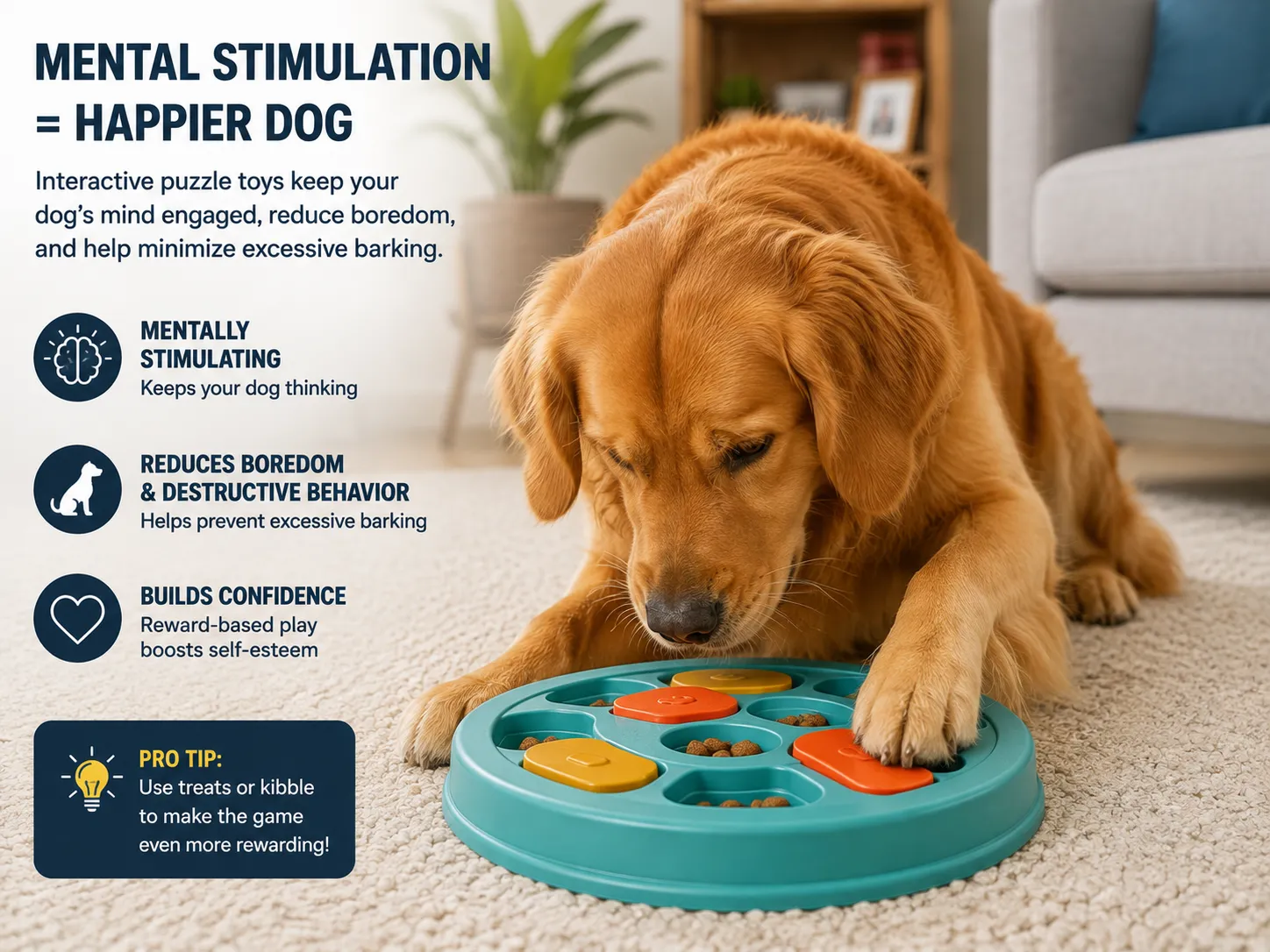
5. Meet Their Physical and Mental Needs A tired, mentally stimulated dog barks far less than a bored one. Daily walks, interactive toys, and puzzle feeders all help burn off the energy that often shows up as barking. ✅ Shop Now — Interactive Puzzle Toys
6. Use Calming Products for Anxiety-Driven Barking For dogs whose barking is rooted in anxiety, pheromone diffusers and calming aids like a ThunderShirt can genuinely help ease the stress behind the behavior. ✅ Shop Now — Calming Pheromone Diffuser ✅ Shop Now — ThunderShirt Calming Wrap
7. Desensitize Gradually to Specific Triggers For doorbell or trigger-specific barking, have someone ring the bell repeatedly at a low intensity while you reward calm behavior, slowly increasing exposure over time. This builds tolerance instead of just suppressing the reaction.
8. Bring in Professional Help When Needed If barking is tied to separation anxiety, fear, or compulsive behavior, a certified trainer or veterinary behaviorist can build a personalized plan. Look for credentials like CPDT-KA or CBCC-KA, and avoid any trainer using punishment-based or dominance-based methods.
What NOT to Do
- Don't yell — your dog may either get scared, or think you're simply barking along with them, reinforcing the behavior
- Don't rely on shock or bark collars — most veterinarians strongly discourage these, and they don't address the root cause, which can lead to worse behavioral fallout like destructiveness or aggression
- Don't punish barking without understanding the cause — suppressing the symptom without addressing the underlying need often backfires
FAQ
1. What's the fastest way to stop a dog from barking? There's no true shortcut, but consistently rewarding silence, avoiding accidental reinforcement, and identifying the trigger tend to produce the fastest real results.
2. Are bark collars effective? They may suppress barking short-term, but most vets and trainers discourage them since they don't address the underlying cause and can lead to increased anxiety or other behavioral issues.
3. Why does my dog bark when I leave the house? This is often separation anxiety. Leaving background noise like a radio, providing comfort items, and gradual desensitization to your departure routine can help.
4. Should I ignore my dog's barking? For attention-seeking barking, yes — ignoring it (and rewarding silence instead) helps avoid reinforcing the behavior. For anxiety or pain-driven barking, ignoring it isn't the right approach; that needs a different strategy.
5. When should I see a vet about my dog's barking? If barking suddenly increases, seems triggered by nothing, or your dog is a senior showing new behavior changes, it's worth ruling out pain, hearing loss, or cognitive decline with a vet visit.
Final Thoughts
Excessive barking isn't something to just shut down — it's your dog trying to tell you something. With consistent training, the right environmental adjustments, and a little patience, most dogs settle into calmer, quieter habits within a few weeks.
Looking for calming aids or training tools that actually worked for other dogs? Real dog owners share honest product reviews on PetRaters.com, so you can skip straight to what works.
✅ Shop Now — Browse top-rated calming & training products
Disclaimer: This article is for informational purposes only and is not a substitute for professional veterinary or behavioral advice. Consult your vet if barking changes suddenly or seems linked to pain, fear, or anxiety. Some links may be affiliate links.