
Why Adopting a Senior Dog Could Be Your Best Decision
Why Adopting a Senior Dog Could Be the Best Decision You Make in 2026
Walk through any shelter and you'll notice a pattern: the puppies get scooped up fast, while the gray-muzzled dogs in the back kennels wait. And wait. According to the ASPCA, while about 60% of puppies and younger dogs get adopted, only 25% of senior dogs find a new home. That's not because something's wrong with them — it's because people walk right past them, drawn to the energy and "clean slate" of a puppy instead.
Here's the thing almost every senior dog adopter says once you actually bring one home: it might be one of the best decisions you ever make. Let's look at why, backed by real shelter data and what rescue organizations see every day.
The Hard Truth Behind the Numbers
Senior dogs — generally considered 7 years and older — make up roughly 28% of the nation's dog population, yet they're consistently the last chosen and the longest to wait in shelters. Many end up there through no fault of their own: an owner passes away, becomes ill, or moves into assisted living, and suddenly a well-behaved 10-year-old dog is sitting in a kennel, confused about why life changed so suddenly.
Vet tip: Shelters and rescues typically provide updated wellness records for senior dogs, so you're rarely adopting completely blind on health — many seniors in rescue care are in genuinely good health with routine vet care already up to date.

The Real Benefits of Adopting a Senior Dog
1. What You See Is What You Get Unlike puppies, whose personality is still forming, a senior dog's temperament, energy level, and quirks are already fully developed. There's no guessing whether that quiet 8-week-old puppy will grow into a high-energy, 80-pound dog — with a senior, you know exactly who you're bringing home.
2. Already Trained Most senior dogs are already housebroken and often already know basic cues like sit, stay, and loose-leash walking. According to rescue professionals, older dogs frequently already understand how to interact with humans, ride in a car, and follow a household routine — skills that can take a puppy months to learn.
3. Calmer, Lower-Maintenance Companionship Senior dogs typically have lower energy needs and are content with shorter walks and more couch time. For people with a slower-paced lifestyle, a demanding work schedule, or simply less patience for 6 a.m. zoomies, a senior dog is often a far better fit than a puppy.
4. You're Genuinely Saving a Life This isn't an exaggeration — roughly 390,000 shelter dogs are euthanized each year in the U.S., and senior dogs are statistically the least likely to be adopted, meaning they're often the most at risk. Choosing a senior dog can be a direct, life-saving decision in a way that's hard to overstate.
5. Often More Affordable Many shelters lower adoption fees for senior dogs specifically to encourage adoption, which can make the upfront cost noticeably lower than adopting a puppy.
What to Actually Prepare For
Adopting a senior dog isn't without its considerations, and being honest about them matters:
- More frequent vet visits — semi-annual checkups are often recommended for aging dogs
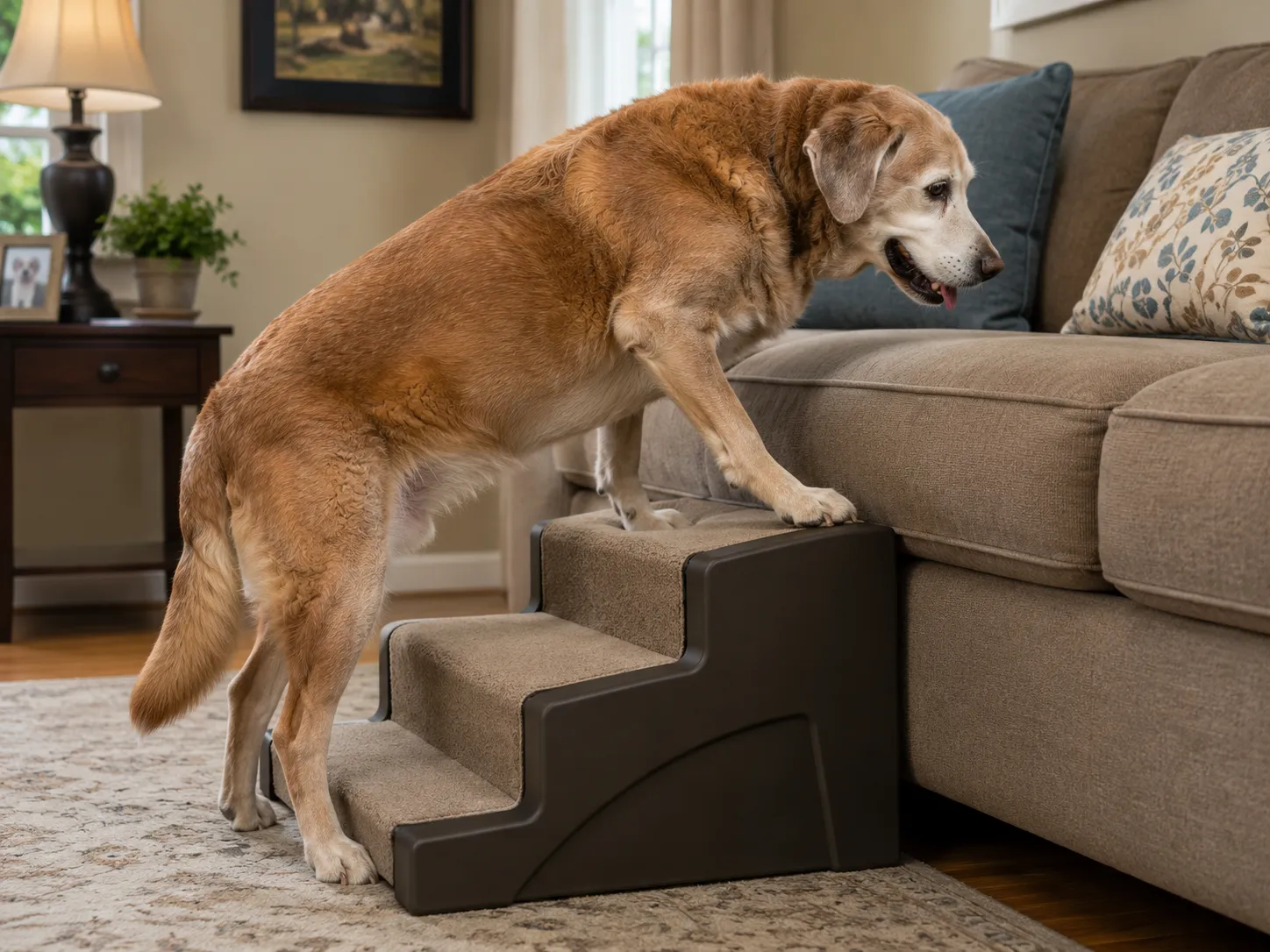
- Possible mobility support — items like dog stairs or ramps can help with joint stiffness or reduced mobility
- Special diets — some seniors need joint support or kidney-friendly nutrition
- A shorter time together — this is the hardest truth, but many adopters say the depth of bond makes the time you do have even more meaningful, not less
Pro tip: Comfortable, supportive bedding makes a real difference for a senior dog's joints, especially if mobility is starting to become an issue. ✅ Shop Now — Orthopedic Senior Dog Bed
For dogs with visible joint stiffness, mobility aids can help them keep participating in daily life instead of struggling with stairs or getting into the car. ✅ Shop Now — Dog Stairs & Mobility Ramp
FAQ
1. What age is considered a "senior" dog? Most organizations define senior dogs as 7 years and older, though larger breeds are often considered senior earlier due to shorter average lifespans.
2. Are senior dogs harder to train than puppies? Not usually — most senior dogs already know basic commands and house-training, and older dogs are still fully capable of learning new behaviors and routines.
3. Why do so many senior dogs end up in shelters? It's rarely a behavioral issue. Most commonly, it's tied to a change in the owner's life circumstances — illness, death, or a move — rather than anything wrong with the dog itself.
4. Is it expensive to care for a senior dog? Vet costs can be somewhat higher due to more frequent checkups, but many shelters offset this with lower adoption fees, and senior dogs generally need less spent on training and puppy-proofing supplies.
5. Is adopting a senior dog emotionally harder because of a shorter lifespan together? It's a real consideration, but most adopters describe the bond with a senior dog as especially deep and rewarding, precisely because both of you know the time matters.
Final Thoughts
Senior dogs aren't a consolation prize — they're calm, grateful, already-trained companions who are too often overlooked simply because they're not puppies anymore. If you've got a slower-paced lifestyle, a soft spot for an underdog, or you're simply looking for a dog who already understands how to be part of a family, a senior dog might be exactly what you didn't know you were looking for.
Thinking about adopting? Real pet owners share honest experiences and product recommendations for senior pets on PetRaters.com, so you can prepare with confidence before bringing one home.
✅ Shop Now — Browse top-rated senior dog essentials
Disclaimer: This article is for informational purposes only. Always consult your vet regarding the specific health and care needs of a senior dog. Some links may be affiliate links.