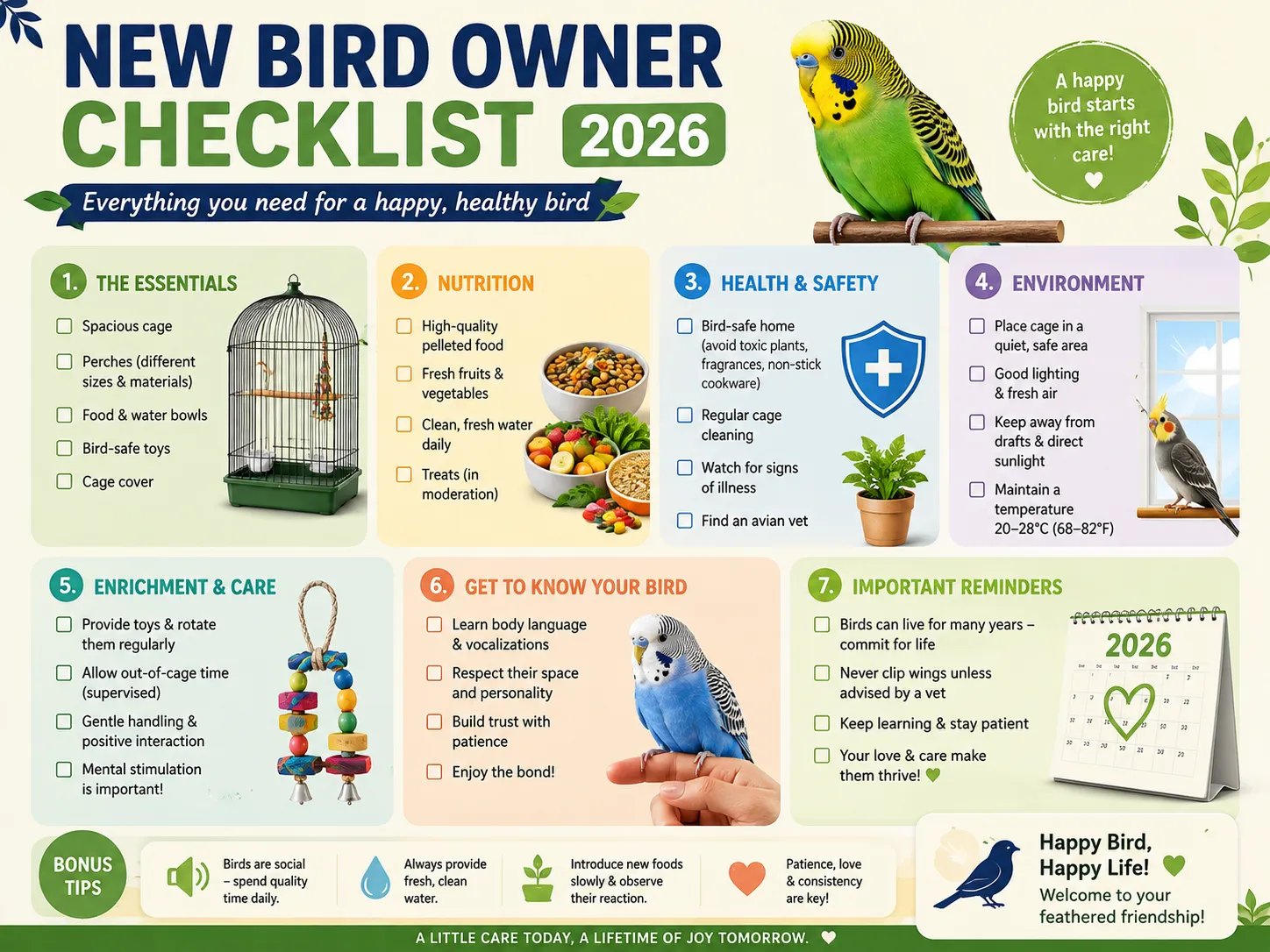
New Bird Owner Guide: Setup & Care Checklist (2026)
Focus:
new bird owner checklist
Secondary Note:
"New bird owner checklist" was chosen over the broader "pet bird care guide" or "new bird checklist" because those terms are dominated by major sites (PetMD, myBird, PetSupplies Plus). This slightly more specific long-tail phrase still captures strong first-time-owner search intent while being a more realistic ranking target for a newer site.
New Bird Owner Guide — Setup & Care Checklist for 2026
Here's something that surprises almost every first-time bird owner: birds are one of the highest-maintenance "small" pets you can bring home, not one of the easiest. They're intelligent enough to get bored, sensitive enough to stress over a rearranged room, and so good at hiding illness that many owners don't realize something's wrong until it's already serious. None of that means you shouldn't get a bird — it just means the setup matters far more than most people expect going in.
Whether you're bringing home a budgie, cockatiel, conure, lovebird, or larger parrot, here's a complete, research-backed new bird owner checklist covering setup, daily care, and the health basics almost every beginner guide skips over.
Before Your Bird Arrives: Cage Setup Essentials
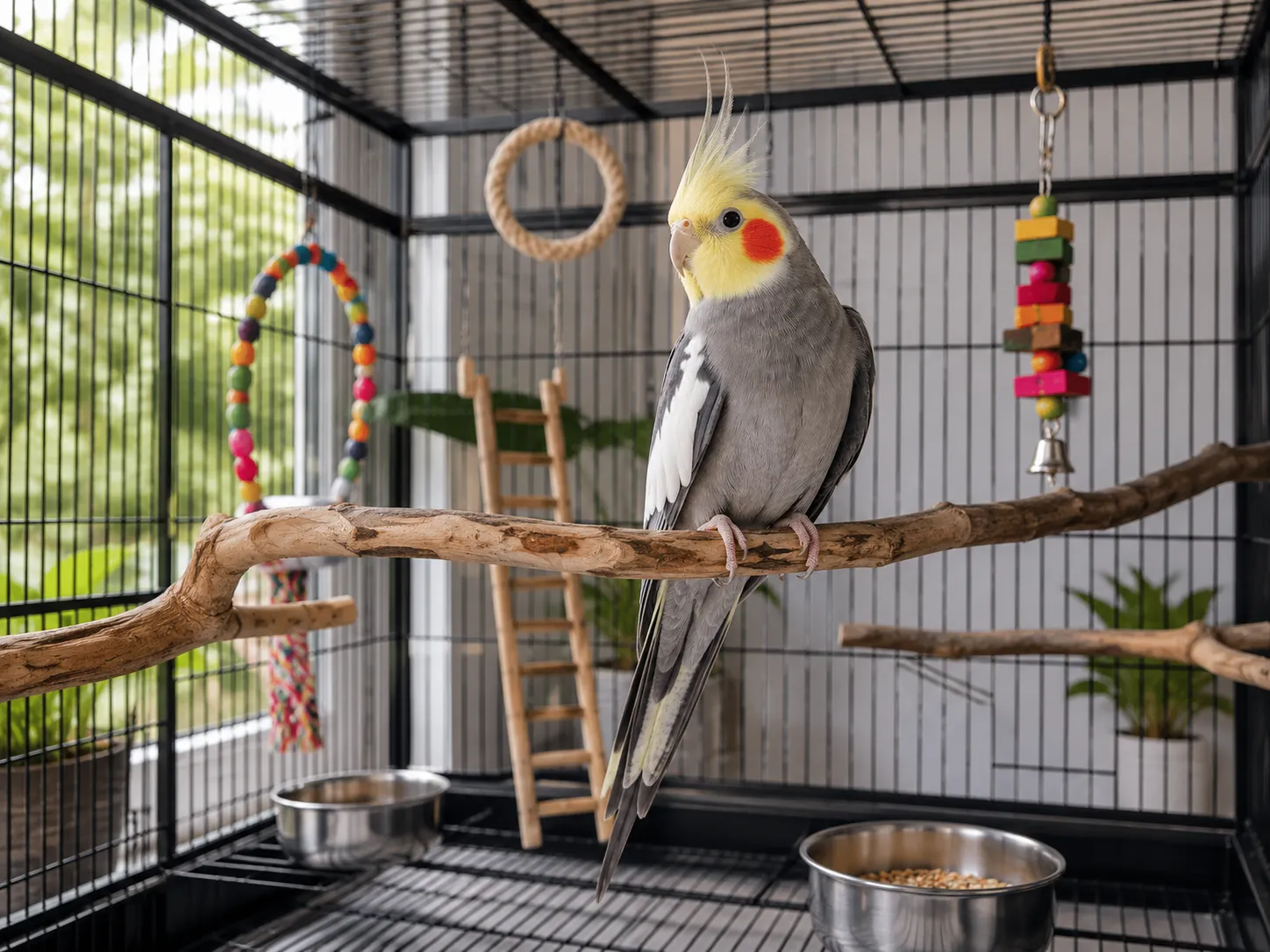
1. The Right Cage The golden rule with bird cages: bigger is always better, even for small species. Your bird will spend the majority of their life in this space, so cage size isn't the place to cut corners. ✅ Shop Now — Bird Cage
2. Variety of Perches Flat, smooth dowel perches (the kind that ship with most cages by default) can actually cause foot problems over time. Birds need a mix of textures and diameters — natural wood, rope, and varying thickness — to keep their feet healthy. ✅ Shop Now — Natural Wood & Rope Perch Set
3. Stainless Steel Food & Water Bowls Stainless steel is far more hygienic than plastic, which can harbor bacteria in scratches and is harder to fully sanitize over time. ✅ Shop Now — Stainless Steel Bird Bowls
4. Proper Cage Lighting This is the detail almost every new owner misses. Regular room lighting isn't enough for a bird — especially inside a cage, where shadows reduce the light intensity your bird actually experiences. Birds also see light differently than humans, and inadequate lighting has been linked to mood and health issues over time. A bird-safe, flicker-free light designed to mount near the cage helps close that gap. ✅ Shop Now — Bird-Safe Cage Light
5. Cage Placement Set the cage up in a quiet, low-traffic area away from kitchens, direct drafts, and windows with intense direct sun — and away from other pets that could add unnecessary stress during the adjustment period.
Daily Care Essentials
6. A Proper Diet A quality pelleted diet, supplemented with fresh vegetables and limited seeds, keeps your bird energetic and supports long-term health. Seed-only diets are one of the most common nutritional mistakes new owners make. ✅ Shop Now — Bird Pellet Food
7. Foraging & Enrichment Toys Birds are highly intelligent and need consistent mental stimulation to prevent boredom-driven behaviors like feather plucking. Rotating 2–3 toys weekly keeps things novel and genuinely engaging. ✅ Shop Now — Bird Foraging Toys
8. Bathing Setup Most birds genuinely love to bathe, and regular bathing supports healthy feathers and skin. A simple spray bottle set to a fine mist works well for birds that prefer a gentle "rain shower" over a dish bath. ✅ Shop Now — Bird Misting Spray Bottle
9. A Safe Play Stand Birds need time outside the cage every day. A dedicated play stand gives them a safe space to climb and explore under supervision, without free-roaming risks. ✅ Shop Now — Bird Play Stand
10. Travel Carrier A small, secure carrier makes vet visits and any necessary travel far less stressful for both of you — and it's much easier to have this ready before you need it in a hurry. ✅ Shop Now — Bird Travel Carrier
11. Grooming Basics Routine nail and beak maintenance is part of normal bird care. Ask your avian vet to show you the safe technique before attempting nail trims yourself for the first time. ✅ Shop Now — Bird Grooming Kit
12. Cleaning Supplies Cage liners, a small sponge, and an enzyme-based or bird-safe cleaner keep the cage, perches, and dishes sanitary — cleanliness plays a bigger role in bird health than most new owners realize. ✅ Shop Now — Bird-Safe Cage Cleaner
The Health Basics Most Beginner Guides Skip
Find an Avian Vet Before You Need One Not every veterinarian treats birds — avian medicine is its own specialty. Look up a local avian vet before bringing your bird home, so you're not scrambling to find one during an emergency.
Learn the Signs of Illness Early Birds are exceptional at masking sickness, a survival trait carried over from the wild, where looking vulnerable makes them a target. Subtle changes — fluffed-up feathers for extended periods, decreased activity, changes in droppings, or reduced vocalization — are often the earliest (and sometimes only) clues something's wrong.
Watch for Household Hazards Birds are curious and can easily get into dangerous situations. Non-stick cookware fumes, essential oil diffusers, scented candles, and certain houseplants can all be genuinely toxic to birds, even in small amounts.
Vet tip: Schedule your bird's first wellness exam within the first couple of weeks of bringing them home, even if they seem perfectly healthy — this establishes a baseline your avian vet can compare against later if something ever seems off.
FAQ
1. What's the most important thing to buy before a bird comes home? The cage is both the biggest expense and the most important decision — bigger is almost always better, since your bird will spend the majority of their life in that space.
2. Do all vets treat birds? No. Avian medicine is a specialty, so it's worth locating a dedicated avian vet in your area before you actually need one, rather than searching during an emergency.
3. How do I know if my bird is sick if they hide it so well? Watch for subtle shifts — fluffed feathers, reduced activity, quieter vocalization, or changes in droppings. These small signals are often the earliest warning a bird gives.
4. Is a seed-only diet okay for pet birds? No, a seed-only diet is one of the most common nutritional mistakes new owners make. A quality pelleted diet with fresh vegetables provides more balanced, long-term nutrition.
5. Do birds really need a light near their cage? Yes. Regular room lighting is often not intense enough inside a cage, and birds process light differently than humans — a dedicated, bird-safe cage light can meaningfully support their overall wellbeing.
Final Thoughts
A happy, healthy pet bird comes down to getting the fundamentals right early: the right cage, a real variety of perches and enrichment, a proper diet, and an avian vet already lined up before you ever need one. None of it requires perfection on day one — just a solid foundation to build from.
Not sure which cage, toys, or care products are actually worth it? Real bird owners share honest product reviews on PetRaters.com, so you can shop smart instead of guessing.
✅ Shop Now — Browse the complete new bird owner essentials collection Book
Disclaimer: This article is for informational purposes only and is not a substitute for professional avian veterinary advice. Care needs vary significantly by species — always confirm specifics with an avian vet. Some links may be affiliate links.