Freshwater Aquarium Setup for Beginners (2026 Guide)
Freshwater Aquarium Setup for Beginners — The Complete Guide
Here's the thing nobody tells you before you buy your first fish tank: the single biggest reason beginner fish die isn't disease, it isn't bad luck, and it usually isn't even something you did wrong with the fish themselves. It's adding fish to a tank that hasn't finished "cycling" yet — a process most first-timers have never even heard of before their fish start dying within the first week.
The good news? Once you understand the cycling process and get the right gear from day one, freshwater fishkeeping is genuinely one of the more forgiving, low-maintenance hobbies out there. Here's a complete, no-fluff freshwater aquarium setup guide for beginners, covering exactly what you need and the mistakes that trip up almost everyone starting out.
Step 1: Pick the Right Tank Size (Bigger Is Actually Easier)
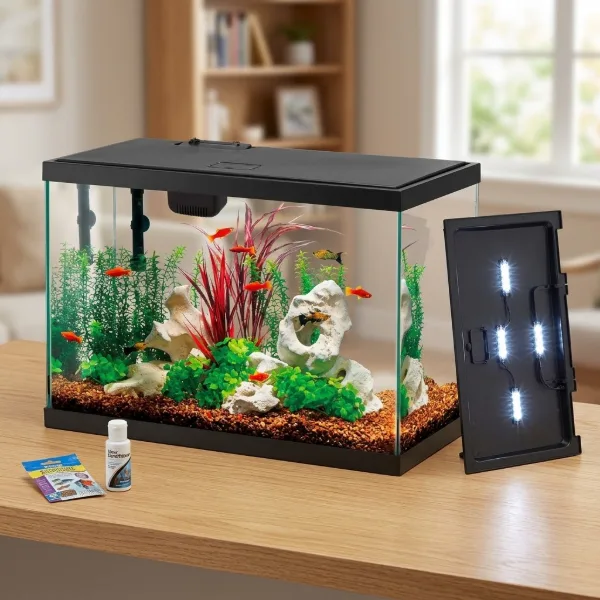
Counterintuitively, a bigger tank is easier for beginners than a small one. Water quality in a larger tank (think 20–29 gallons and up) changes far more slowly than in a small bowl or nano tank, which gives you more time to notice and fix problems before they turn into a dead fish. Keep in mind aquariums weigh roughly 10 pounds per gallon of water once filled, so a sturdy, level stand rated for your tank's weight is non-negotiable. ✅ Shop Now — 20-Gallon Starter Aquarium Kit ✅ Shop Now — Aquarium Stand (Weight-Rated)
Step 2: Get the Essential Equipment
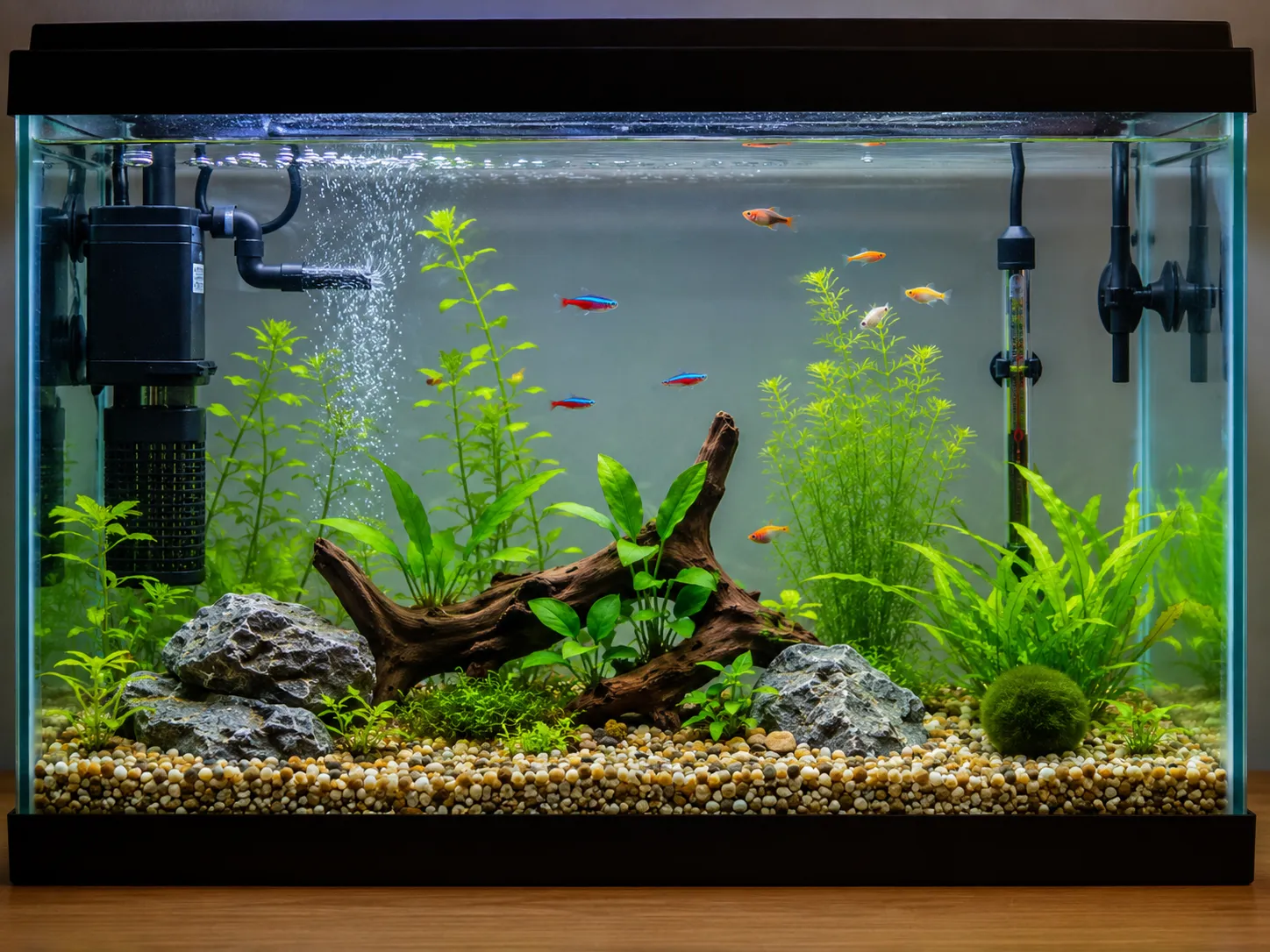
- Filter — should turn over your total tank volume 4–6 times per hour
- Heater — keeps temperature stable (most tropical fish need 72–82°F depending on species)
- Thermometer — even a few degrees of swing can stress sensitive fish
- Substrate — gravel is beginner-friendly and easy to clean; sand works for certain species
- Water conditioner — removes chlorine and other chemicals that are otherwise lethal to fish
- Lighting — most freshwater fish do well with 8–10 hours of moderate light daily
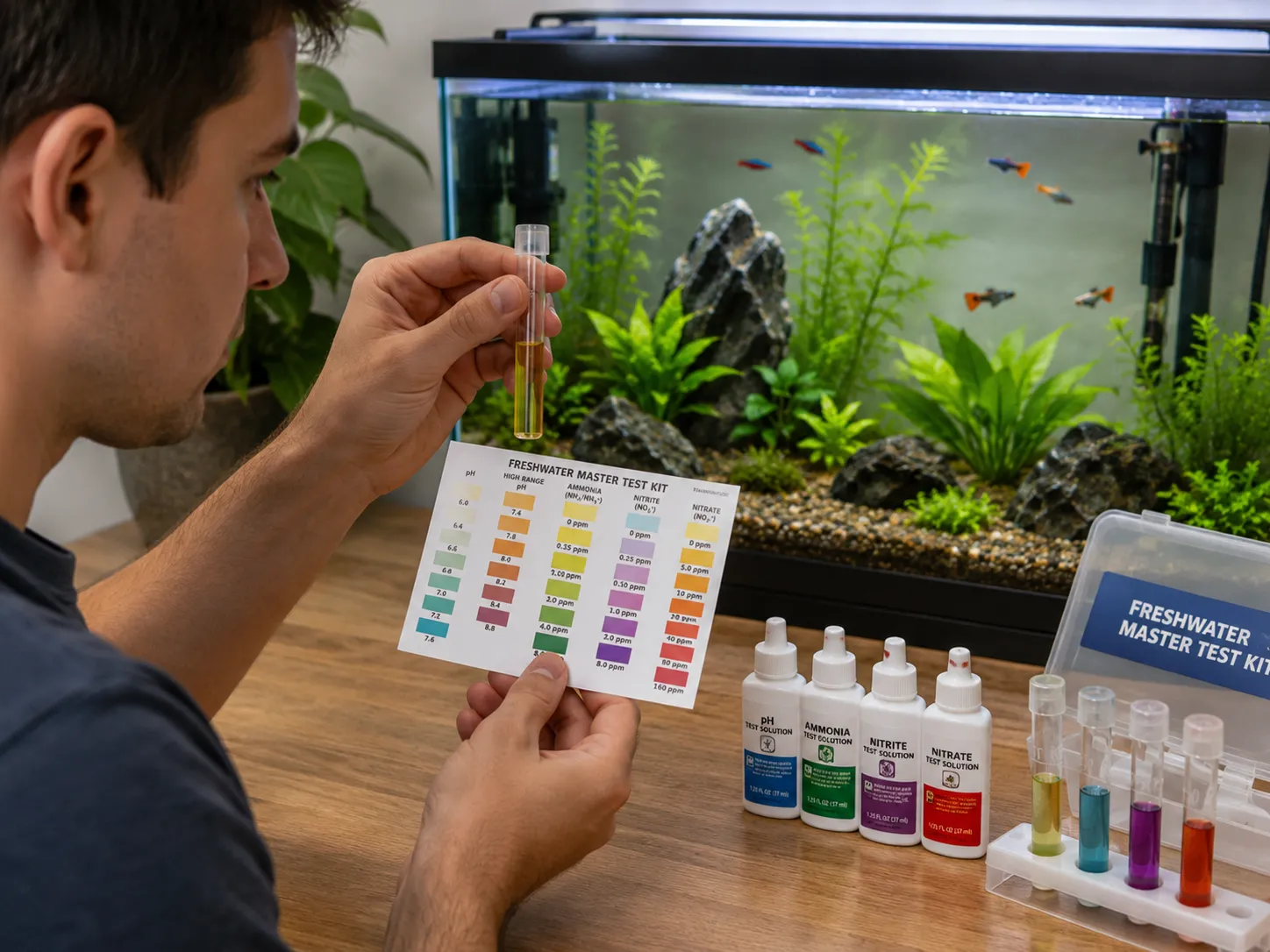
- Water test kit — for monitoring ammonia, nitrite, and nitrate levels
✅ Shop Now — Aquarium Filter (Power Filter, 4-6x Turnover)
✅ Shop Now — Submersible Aquarium Heater
✅ Shop Now — Digital Aquarium Thermometer
✅ Shop Now — Aquarium Gravel Substrate
✅ Shop Now — Water Conditioner (Dechlorinator)
✅ Shop Now — Aquarium LED Light with Timer
✅ Shop Now — Freshwater Master Test Kit
Step 3: Set Up the Tank (In the Right Order)
- Rinse the tank and check for cracks or leaks before committing to a spot
- Place your stand somewhere sturdy, level, and away from direct sunlight and heating/cooling vents
- Add rinsed substrate, then arrange decorations, driftwood, and plants — leave plenty of open swimming room
- Install the filter, heater, and thermometer per the manufacturer's instructions, but don't power anything on yet
- Fill the tank with water and add water conditioner immediately
- Loop power cords downward before they reach the outlet — this simple trick keeps water from following the cord into your socket
- Plug in the heater and filter, then let the tank stabilize for 24–48 hours before doing anything else
Pro tip: Don't panic if the water looks cloudy after filling — this is normal and usually clears up within a day or two as the tank settles.
Step 4: Cycle the Tank Before Adding Fish (The Step Almost Everyone Rushes)
This is where most beginners go wrong. Cycling is the process of growing beneficial bacteria that break down fish waste into less harmful compounds. Skipping or rushing this step is the number one cause of early fish deaths.
- Cycling typically takes 3–6 weeks
- If starting with fish, add just a small number initially to establish waste for the bacteria to feed on
- Test water weekly for ammonia and nitrite — you're waiting for both to consistently read zero
- Only once levels stabilize at zero should you begin adding the rest of your fish, gradually, a few at a time
Vet/hobbyist tip: A common rule of thumb is roughly one inch of adult fish size per gallon of water as a rough stocking guideline, though this varies by species — research your specific fish before finalizing your stocking plan.
Step 5: Acclimate and Add Fish the Right Way
When you bring fish home, don't just dump them (and their shipping/bag water) straight into the tank. Float the bag in the tank for about 15–20 minutes to match temperature, then gradually mix small amounts of tank water into the bag over another 15–20 minutes before releasing the fish — never adding the original bag water into your tank.
Common Beginner Mistakes to Avoid
- Choosing too small a tank — smaller tanks are actually harder to keep stable, not easier
- Skipping the cycling process — the single biggest cause of early fish loss
- Adding too many fish too fast — overwhelms the bacterial colony before it can catch up
- Sudden temperature swings — genuinely stressful and can trigger illness in otherwise healthy fish
- Forgetting regular water changes — even a fully cycled tank needs ongoing maintenance to stay healthy
Frequently Asked Questions
1. How long does it take to cycle a new fish tank? Most tanks take 3 to 6 weeks to fully cycle. Testing weekly for ammonia and nitrite will tell you exactly when it's safe to add your full fish population.
2. Is a bigger fish tank really easier for beginners? Yes. Larger tanks (20 gallons and up) have more stable water chemistry, which gives you more time to catch and correct problems before they become dangerous for your fish.
3. Can I add fish to my tank right away after setting it up? No. Adding fish before the tank has cycled is the leading cause of early fish death. Wait for ammonia and nitrite to consistently test at zero first.
4. What temperature should my freshwater aquarium be? Most tropical freshwater fish do best between 72–82°F, though this varies by species — always check the specific needs of the fish you plan to keep.
5. How often should I do water changes in a freshwater tank? Regular partial water changes (commonly weekly or biweekly, depending on your tank's bioload) are essential even after cycling, to keep nitrate levels in check and water quality stable.
Related reading: 10 Best Beginner Freshwater Fish for Your First Tank, New Bird Owner Guide: Setup & Care Checklist (2026), New Puppy Supplies Checklist 2026 (Complete Guide).
Final Thoughts
A calm, thriving freshwater aquarium isn't about luck — it's almost entirely about patience during setup and cycling. Get the right-sized tank, the right core equipment, and let the nitrogen cycle actually finish before adding fish, and you'll avoid the mistakes that sink most beginner tanks in the first few weeks.
Not sure which filter, heater, or starter kit is actually worth it? Real aquarium owners share honest product reviews on PetRaters.com, so you can shop smart instead of guessing.
✅ Shop Now — Browse the complete freshwater aquarium starter collection
Disclaimer: This article is for informational purposes only. Equipment needs and water parameters vary by species — always research the specific requirements of the fish you plan to keep. Some links may be affiliate links.