7 Common Pet Bird Diseases & Symptoms Every Owner Should Know (2026 Guide)
In this guide
7 Common Pet Bird Diseases & Symptoms Every Owner Should Know
This guide covers common pet bird diseases in plain language, with practical advice you can use today.
Birds mask illness so well that many owners don't realize something is wrong until a disease has already progressed. Knowing the early warning signs — and understanding which are emergencies versus which can wait for a scheduled vet visit — makes a real difference in outcomes. Here are the conditions avian vets see most often in pet birds, along with the supportive products that help with prevention and day-to-day care.
1. Psittacosis (Parrot Fever)
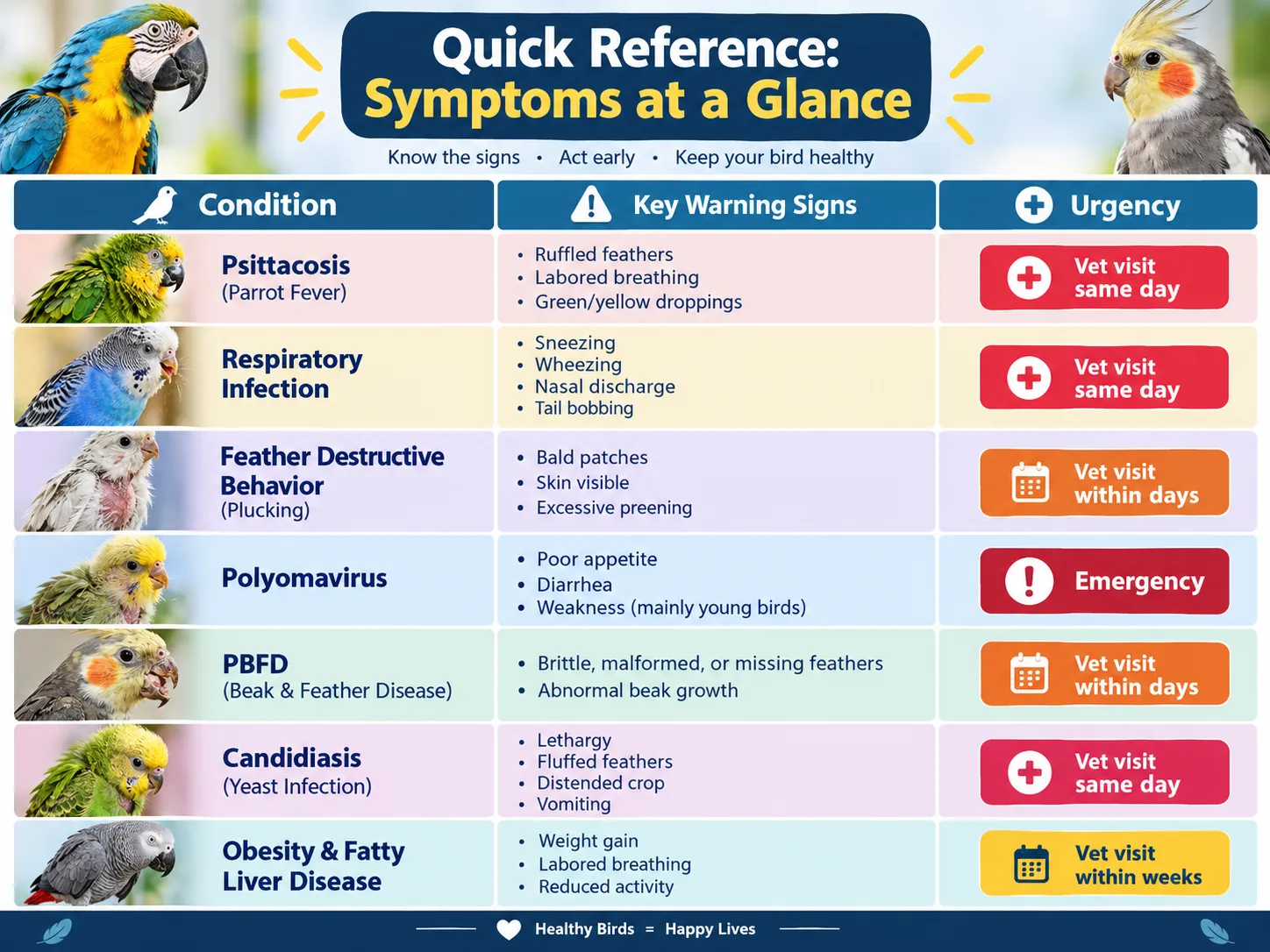
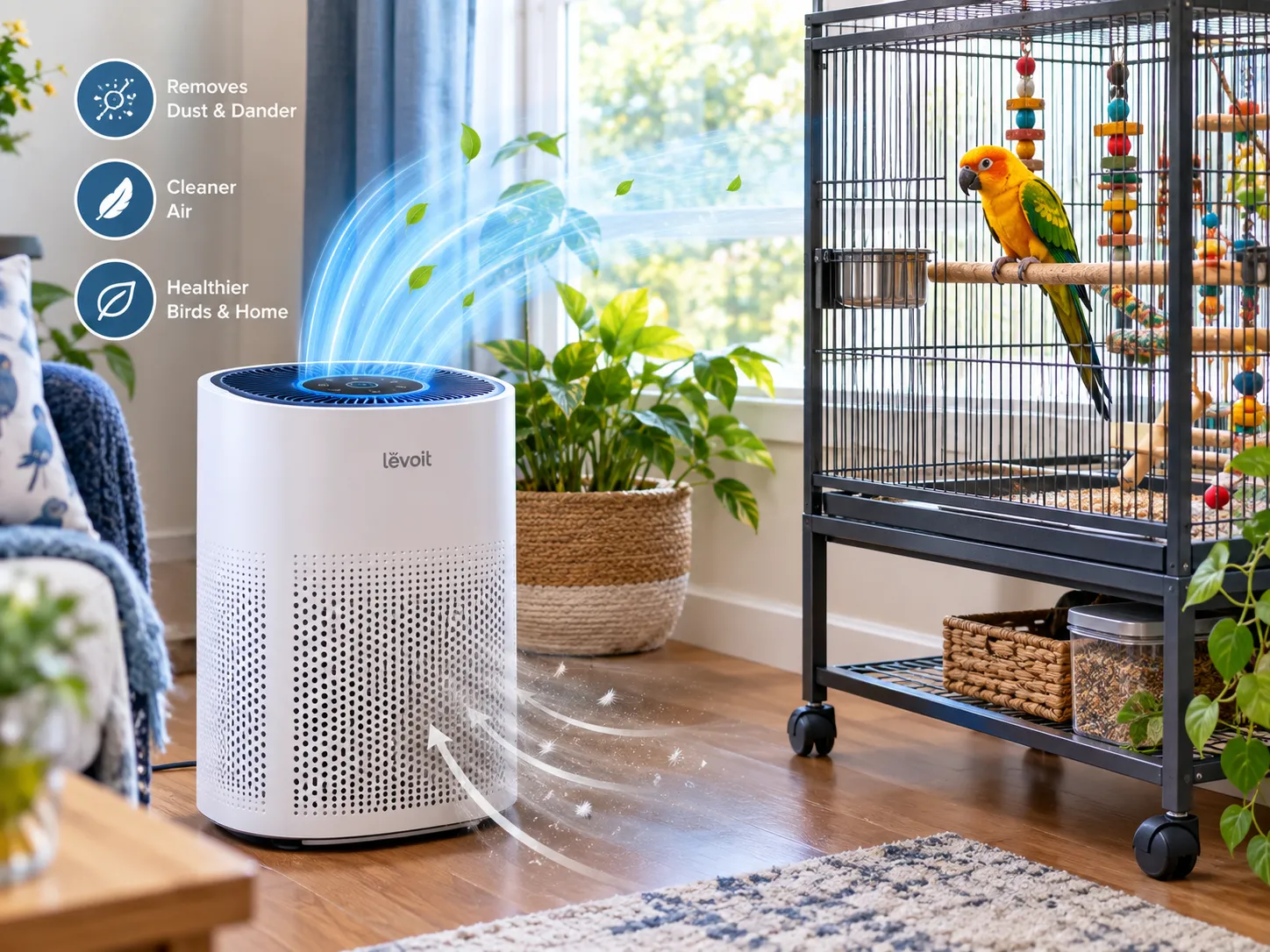
Caused by the bacterium Chlamydia psittaci, this is one of the most well-known bird diseases specifically because it's zoonotic — it can pass from birds to humans, usually through inhaled dust from droppings or feathers. Symptoms include ruffled feathers, low energy, labored breathing, eye and nose discharge, and green or yellow droppings. Cockatiels, budgies, and parrots are among the most commonly affected species, and severe cases can be fatal without prolonged antibiotic treatment. What helps: A True HEPA air purifier reduces airborne dust and dander that can carry bacteria between birds and around the household. ✅ Shop Now — HEPA Air Purifier for Bird Rooms
2. Respiratory Infections
Caused by bacteria, viruses, fungi, or parasites affecting the lungs, air sacs, or nasal passages, respiratory infections show up as sneezing, wheezing, nasal discharge, labored breathing, or a bobbing tail with every breath. Good cage ventilation, consistent temperature, and avoiding aerosol sprays or smoke near the cage all reduce risk. What helps: A cage-safe air purifier and a stable-temperature brooder or space heater reduce the environmental triggers most linked to respiratory issues. ✅ Shop Now — Cage-Safe Air Purifier
3. Feather Destructive Behavior (Plucking)
Feather plucking ranges from mild over-preening to severe self-mutilation, and it has both behavioral and medical roots — boredom and stress are common triggers, but skin infections, parasites, nutritional deficiencies, and hormonal imbalances need to be ruled out first by an avian vet before assuming it's purely behavioral. What helps: Regular bathing encourages normal preening instead of plucking, and foraging toys address the boredom-driven cases directly. ✅ Shop Now — Bird Bath Tub & Foraging Toy Bundle
4. Polyomavirus
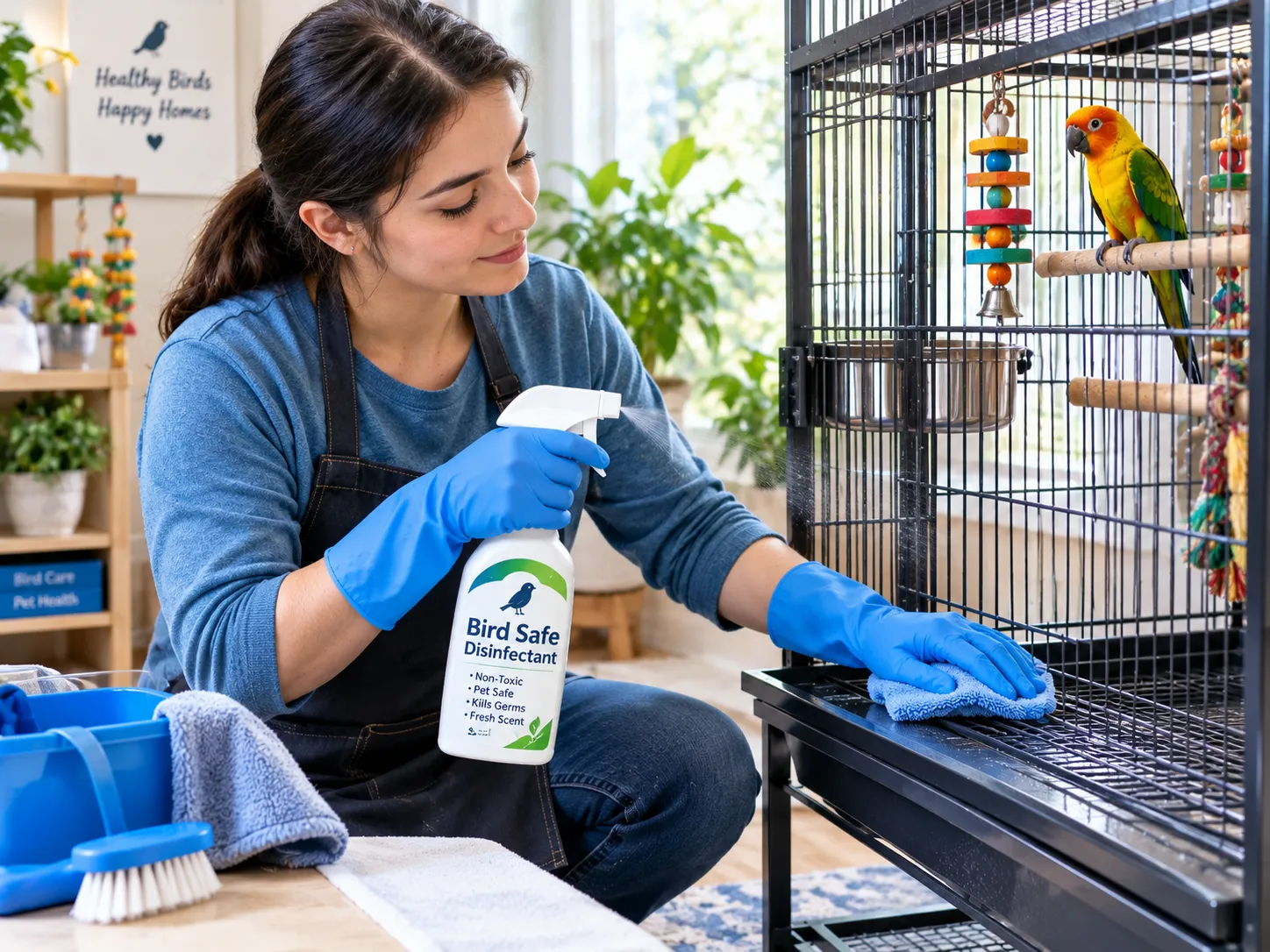
First identified in budgies and now known across other parrots and finches, this virus spreads through direct contact, feather dust, or droppings, and is most dangerous to nestlings and juvenile birds. Infected birds often develop poor appetite, diarrhea, and weakness quickly, with potential damage to the heart, liver, and kidneys. What helps: Strict cage hygiene and quarantining new birds before introducing them to an existing flock are the most effective prevention steps. ✅ Shop Now — Bird Cage Disinfectant Spray
5. Psittacine Beak and Feather Disease (PBFD)
A highly contagious viral disease causing feathers to become brittle, malformed, or fail to grow properly, along with reduced immunity that leaves birds vulnerable to secondary infections. It's especially common in cockatoos and lorikeets and has no cure, making prevention and early testing critical. What helps: Testing new birds before introducing them to your flock is the most reliable way to prevent PBFD from spreading in multi-bird households. ✅ Shop Now — Avian PBFD Test Kit
6. Candidiasis (Yeast Infection)
A fungal infection often affecting the crop and digestive tract, showing up as lethargy, fluffed feathers, little to no appetite, vomiting, and a crop that feels distended or full of mucus. It's treated with antifungal medication prescribed by an avian vet. What helps: A clean, dry cage environment and fresh food removed promptly (rather than left to sit) reduce the conditions yeast needs to grow. ✅ Shop Now — Bird Cage Liner & Cleaning Kit
7. Obesity & Fatty Liver Disease
A growing concern in sedentary species like Amazon parrots and budgies, usually caused by a high-fat, high-seed diet with too little exercise. It raises the risk of fatty liver disease, respiratory problems, and even stroke or heart attack. What helps: Transitioning from a seed-heavy diet to high-quality pellets and fresh vegetables, plus daily out-of-cage exercise time. ✅ Shop Now — Vet-Recommended Pellet Diet & Play Gym
How We Chose These
We prioritized the conditions avian vets and veterinary manuals cite most frequently in pet birds, rather than rare exotic diseases most owners will never encounter. We also paired each condition with a genuinely relevant supportive product — prevention or environmental management, not a marketed "cure" — since no product replaces an actual avian vet diagnosis.
Buying Guide: Building a Bird Health Prevention Kit
- Air quality — a True HEPA purifier reduces airborne dust linked to psittacosis and respiratory infections, especially important in multi-bird households
- Cage hygiene — daily liner changes and a bird-safe disinfectant spray reduce bacterial and fungal risk far more effectively than occasional deep cleans
- Diet — shift away from seed-heavy diets toward pellets and fresh vegetables to reduce obesity and fatty liver risk
- Enrichment — foraging toys and a bath tub reduce boredom-driven feather plucking, though medical causes always need ruling out first
- New bird quarantine — always quarantine and test a new bird for at least 30 days before introducing it to an existing flock, especially for PBFD and psittacosis
- Annual avian vet exams — healthy adult birds should see an avian vet at least once a year; birds hide illness well, so a wellness exam often catches problems before visible symptoms appear
Pro tip: Because birds instinctively hide illness, any behavior change — reduced vocalizing, fluffed feathers for more than a few hours, a change in droppings — is worth treating as a possible early symptom rather than waiting to see if it resolves on its own.
Frequently Asked Questions
1. Which bird diseases can spread to humans? Psittacosis is the most well-known zoonotic risk, though it's uncommon with good hygiene like handwashing after handling your bird or cleaning the cage. Anyone with bird exposure who develops flu-like respiratory symptoms should mention it to their doctor.
2. Is feather plucking always a medical problem? Not always — boredom, stress, and hormonal triggers can cause plucking on their own. But because skin infections, parasites, and nutritional deficiencies can look identical from the outside, an avian vet visit is the only way to rule out a medical cause first.
3. How can I tell if my bird's feather loss is normal molting or something wrong? Normal molting happens once or twice a year depending on species and is gradual and even. Sudden, patchy, or localized feather loss — especially with visible skin — points toward a medical or behavioral issue worth investigating.
4. What's the fastest-progressing bird disease owners should watch for? Polyomavirus can progress quickly in young birds, with poor appetite, diarrhea, and weakness developing fast. Any of these symptoms in a nestling or juvenile bird warrants an emergency vet visit rather than waiting.
5. How often should a healthy bird see an avian vet? At least once a year for healthy adult birds, with more frequent visits for young birds, senior birds, or those with an existing chronic condition. Establishing a relationship with an avian vet before an emergency makes urgent situations far less stressful.
Related reading: 7 Common Cat Diseases & Symptoms Every Owner Should Know, How to Keep Your Pet Bird Healthy: Complete Care Guide, 7 Common Dog Diseases.
Final Verdict
Most serious bird diseases share a pattern: they progress fast and hide well, which means prevention does more work than treatment. A True HEPA air purifier, consistent cage hygiene, a pellet-based diet, and daily enrichment cover the biggest risk factors across nearly every condition on this list. But no product replaces an annual avian vet exam — birds are built to mask illness, and a wellness check often catches problems weeks before any visible symptom shows up.
Not sure which prevention products are worth it for your bird? Real pet owners share honest product reviews on PetRaters.com, so you can shop with confidence instead of guessing.
✅ Shop Now — Browse all top-rated bird health & wellness products
Disclaimer: This article is for informational and educational purposes only and is not a substitute for veterinary diagnosis or treatment. If your bird shows any symptoms described here, contact an avian veterinarian promptly. Some links may be affiliate links.