10 Best Parrot & Bird Enrichment Toys of 2026 (Foraging, Chew & Puzzle Picks)
10 Best Parrot & Bird Enrichment Toys of 2026
In the wild, parrots spend up to 70% of their day foraging for food. A bird sitting in front of an open food bowl all day isn't just under-stimulated — it's missing the single behavior its brain is wired to do most. The 2026 bird toy market has responded with genuinely smarter design: multi-step foraging puzzles, species-matched chew materials, and safety-tested options that finally move past the "colorful plastic thing" era. Here's what's actually worth adding to the cage.

👉 Match the toy to your bird's skill level below before you buy. ✅
1. Foraging Wall / Foraging Box
A cage-mounted panel with multiple hidden compartments that a bird has to open, unlatch, or dig through to find treats — one of the most recommended starting points for owners introducing foraging for the first time. Why bird owners love it: Turns feeding time into the mental work birds are actually wired to want. ✅ Shop Now — Foraging Wall / Foraging Box
2. Clear Treat-Dispensing Foraging Ball
A transparent ball that lets a bird see the treat inside while it works out how to release it — the easiest entry point for a bird that's only ever eaten from an open bowl. Why bird owners love it: Low-frustration first step before moving to harder puzzles. ✅ Shop Now — Clear Foraging Ball
3. Multi-Step Drawer Puzzle Toy
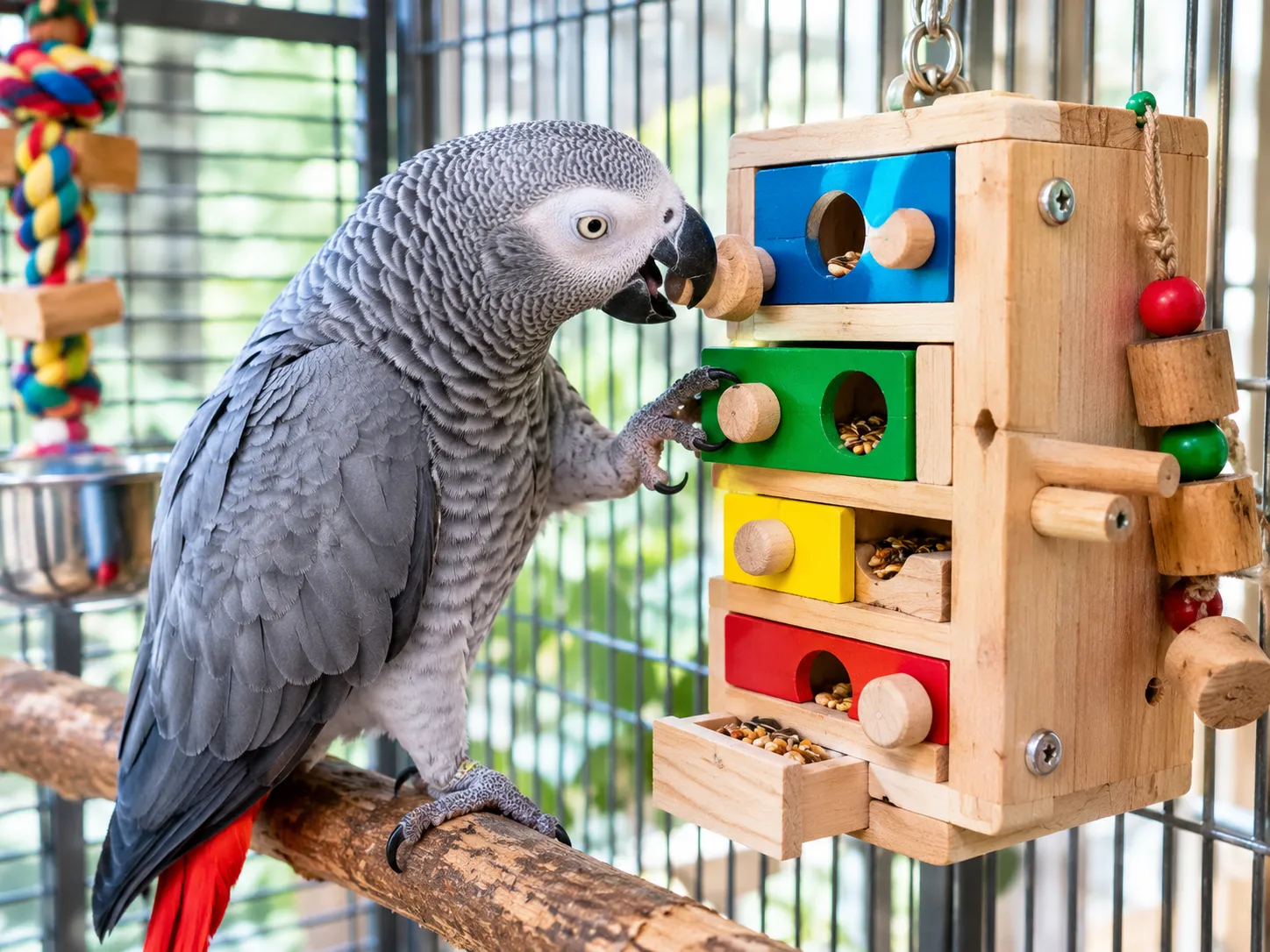
Requires a bird to slide panels, unscrew bolts, or match shapes across multiple steps to reach a reward — built specifically for highly intelligent species like African Greys and Macaws that outgrow simple toys quickly. Why bird owners love it: Genuinely challenges birds that get bored of easier puzzles within days. ✅ Shop Now — Multi-Step Drawer Puzzle
4. Natural Wood Chew Block Set
Untreated wood blocks sized for chewing, satisfying a bird's natural urge to gnaw while helping keep the beak naturally worn down and healthy. Why bird owners love it: Redirects chewing away from cage bars and household furniture. ✅ Shop Now — Natural Wood Chew Block Set
5. Shreddable Cardboard Platform Perch
A chewable cardboard platform that doubles as a perch and a shredding outlet, popular for budgies, cockatiels, and conures that enjoy tearing material apart as much as chewing it. Why bird owners love it: Cheap to replace and satisfies a shredding instinct toys alone don't always cover. ✅ Shop Now — Shreddable Cardboard Platform

6. Rope Perch with Wood Chew Ends
A textured rope perch combined with natural wood chew ends, giving a bird varied footing that supports foot health alongside a built-in chew outlet. Why bird owners love it: One accessory covers two needs — better perching variety and natural chewing. ✅ Shop Now — Rope Perch with Chew Ends
7. Bird Bath Tub with Perch
A shallow bath attachment that clips onto the cage, encouraging regular bathing — a behavior that supports normal preening and can help reduce feather-plucking tendencies. Why bird owners love it: Makes bath time simple enough that it actually happens regularly. ✅ Shop Now — Bird Bath Tub with Perch
8. Hanging Sola Ball Shredder Toy
Soft, natural sola-wood balls on a hanging chain, sized for small parrots and lovebirds to grip, chew, and shred without the risk of splintering into sharp pieces. Why bird owners love it: Safe shredding material sized right for smaller beaks. ✅ Shop Now — Sola Ball Shredder Toy
9. Screw-and-Bolt Puzzle Toy
A wooden puzzle requiring a bird to physically unscrew bolts or twist components to access a treat — mimicking the complex problem-solving intelligent parrots would do foraging in a rainforest canopy. Why bird owners love it: One of the few toys that keeps advanced birds engaged for more than a few minutes. ✅ Shop Now — Screw-and-Bolt Puzzle Toy
10. Rotating Bird Play Gym Stand
A freestanding play stand with multiple perch heights, toy hooks, and often a feed bowl and tray, giving a bird a dedicated out-of-cage space to climb and play under supervision. Why bird owners love it: Extends enrichment beyond the cage without letting a bird roam unsupervised. ✅ Shop Now — Bird Play Gym Stand
How We Chose These
We organized picks by developmental stage and species size rather than a single generic "best toy" list, since a puzzle that challenges an African Grey will be ignored — or worse, frustrating — for a budgie, and vice versa. We also prioritized natural, non-toxic materials (untreated wood, sola wood, cotton rope) over painted or metal-heavy options, since material safety is one of the most common concerns among owners shopping this category.

Buying Guide: Match the Toy to Your Bird
- New to foraging? Start with a clear treat ball or simple cardboard wrap before moving to multi-step puzzles — birds that have only eaten from an open bowl need an easy first win
- Highly intelligent species (African Grey, Macaw, Cockatoo) — invest in multi-step or screw-and-bolt puzzles; simple toys get ignored within days
- Heavy chewers — rotate in natural wood blocks regularly, since beak health depends on consistent chewing material, not just occasional access
- Avoid cheap metallic toys or cages — lower-quality metal components can contain toxic materials; stick to stainless steel hardware and natural materials like coconut shell, jute, paper, and wood
- Rotate toys weekly — even well-loved toys lose their enrichment value if they're never swapped out or rearranged in the cage
Pro tip: If your bird has started plucking or screaming more than usual, don't just add more toys — rule out a medical cause with an avian vet first. Feather-destructive behavior can stem from boredom, but it can also signal a skin condition, parasites, or a nutritional deficiency that toys alone won't fix.
FAQ
1. How do I get my bird to actually use foraging toys? Start simple — place a small piece of paper over their food dish so they learn to move an object to eat, then progress to a clear treat ball before introducing harder multi-step puzzles.
2. Are wooden or acrylic foraging toys better? Acrylic toys are durable and let the bird see the reward, which helps beginners avoid frustration. Wood toys add the benefit of letting the bird chew through the barrier itself, which is closer to natural foraging behavior.
3. How often should I rotate my bird's toys? Weekly rotation is a common recommendation — even a bird's favorite toy loses enrichment value once it becomes part of the background instead of something new to investigate.
4. Can the wrong toy actually hurt my bird? Yes — toys with small detachable parts, certain metals, or materials that splinter into sharp pieces pose real risks. Stick to toys explicitly labeled safe for your bird's species and size.
5. My bird ignores every toy I buy — what am I doing wrong? Mismatched difficulty is the most common cause. A toy too easy gets solved once and abandoned; a toy too hard never gets attempted at all. Step down to an easier puzzle before assuming your bird "just doesn't like toys."

Final Verdict
If you're setting up a cage for the first time, start with a clear foraging ball and a natural wood chew block — both are low-risk, easy wins for any bird. For intelligent species like African Greys or Macaws, a multi-step drawer puzzle or screw-and-bolt toy is the upgrade that actually holds their attention. And if plucking or screaming has already started, pair any toy upgrade with a check-up — enrichment helps, but it isn't a substitute for ruling out a medical cause.
Not sure which bird toys are worth it for your species? Real pet owners share honest product reviews on PetRaters.com, so you can shop with confidence instead of guessing.
✅ Shop Now — Browse all top-rated bird toys and enrichment products
Disclaimer: This article is for informational purposes only. Always supervise your bird with new toys and consult an avian veterinarian about sudden changes in behavior like feather plucking or excessive screaming. Some links may be affiliate links.