How to Stop Cats From Scratching Furniture (2026 Guide)
How to Stop a Cat From Scratching Furniture — Complete Guide
If your couch is starting to look like it lost a fight, you're far from alone. Scratching is one of the most common complaints cat owners have — and also one of the most misunderstood. Your cat isn't scratching the furniture out of spite. It's a completely natural, instinctual behavior tied to nail health, muscle stretching, stress relief, and territory marking. The goal was never to eliminate scratching entirely — vets are clear that trying to do that can actually backfire into other stress-related behaviors. The real goal is redirection.
Here's a full, vet-approved guide to stop cats from scratching furniture, without punishment, without declawing, and without a shredded sectional.
Why Cats Scratch Furniture in the First Place
Cats start scratching as early as 8 weeks old, and it serves several real purposes: keeping their claws healthy, stretching their back and shoulder muscles, marking territory through visible scratches and paw-gland pheromones, and releasing built-up stress or excess energy. Understanding this is the first step — you're not fighting a bad habit, you're redirecting a biological need.
Vet tip: A sudden increase in destructive scratching in a previously well-behaved cat can sometimes signal pain from arthritis, nail bed infection, or injury. If the behavior changes suddenly, it's worth a vet visit to rule out a medical cause.
Step-by-Step Guide to Redirect Scratching
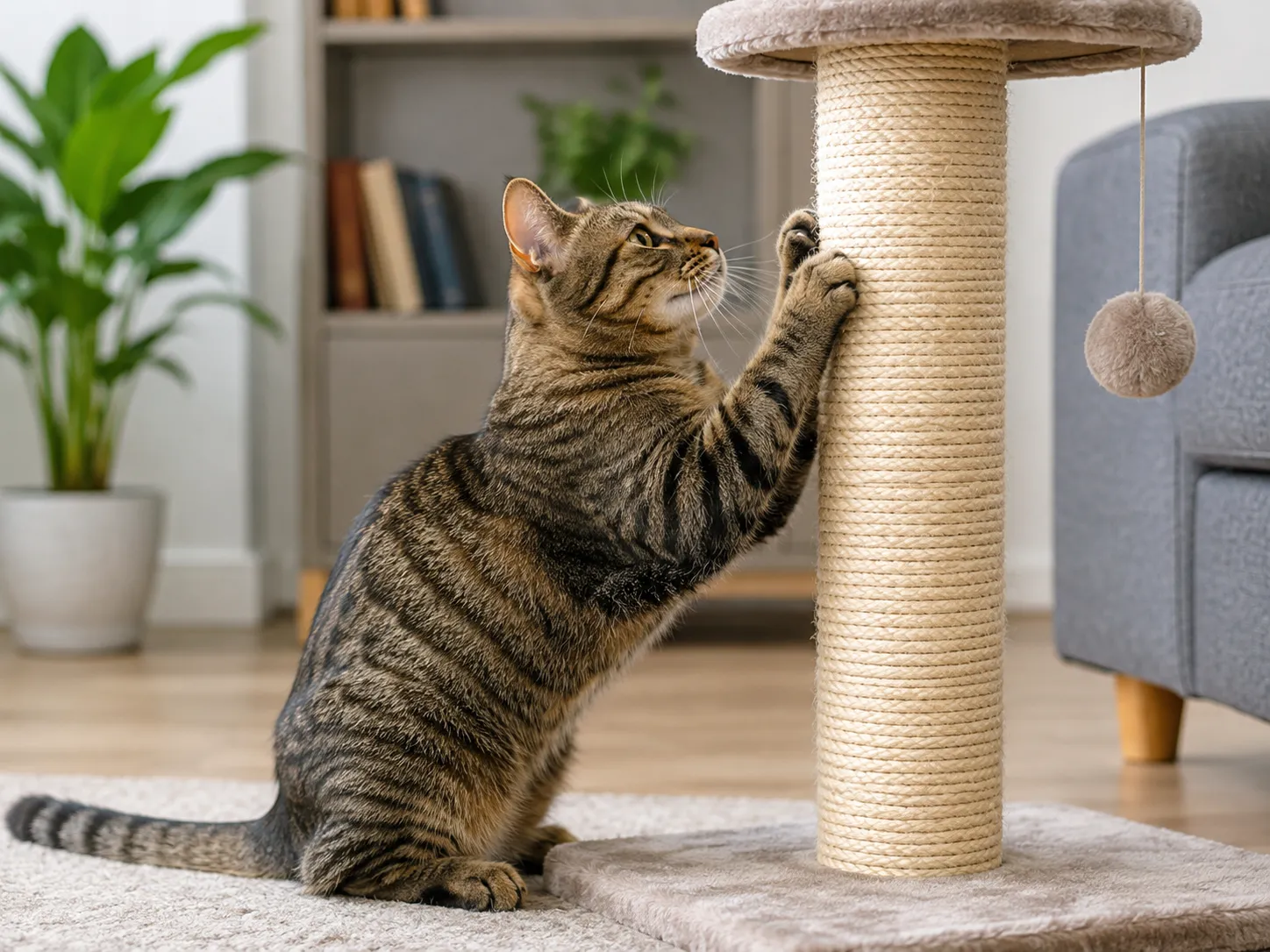
1. Give Your Cat the Right Scratching Post (or Several) This is the single most important step. Offer multiple scratching surfaces in different materials — sisal rope, cardboard, carpet — near the furniture your cat already targets. If you have multiple cats, each one should have their own options. Vet tip: Vertical posts should be tall enough for a full-body stretch, and horizontal scratchers work well for cats who prefer scratching rugs or carpet.
2. Make the Post More Appealing Than the Couch Rub a little catnip on the post, place it near where your cat already spends time, and reward them with praise or a treat when they use it. Cats gravitate toward what feels good and smells familiar, so make the right choice the easy choice.
3. Make the Furniture Less Appealing Temporary deterrents can help redirect attention away from furniture while your cat adjusts:
- Double-sided sticky tape on targeted spots (cats dislike the tactile sensation)
- Aluminum foil, which creates an unstable, noisy surface cats tend to avoid
- Citrus-based sprays, since most cats are sensitive to citrus scent
Pro tip: These deterrents work best as a temporary bridge while the scratching post becomes the new habit — not as a permanent fix on their own.
4. Try Pheromone Diffusers Products like Feliway mimic natural calming feline pheromones and have shown real results for owners dealing with stress-related scratching, especially when paired with consistent scratching post training. ✅ Shop Now — Feliway Calming Diffuser
5. Keep Nails Trimmed Regularly Trimming every 2–3 weeks significantly reduces the damage scratching can cause, even if your cat occasionally slips back into old habits. Use cat-specific clippers and only trim the sharp tip, avoiding the quick (the pink area with nerves and blood vessels). ✅ Shop Now — Cat Nail Clippers
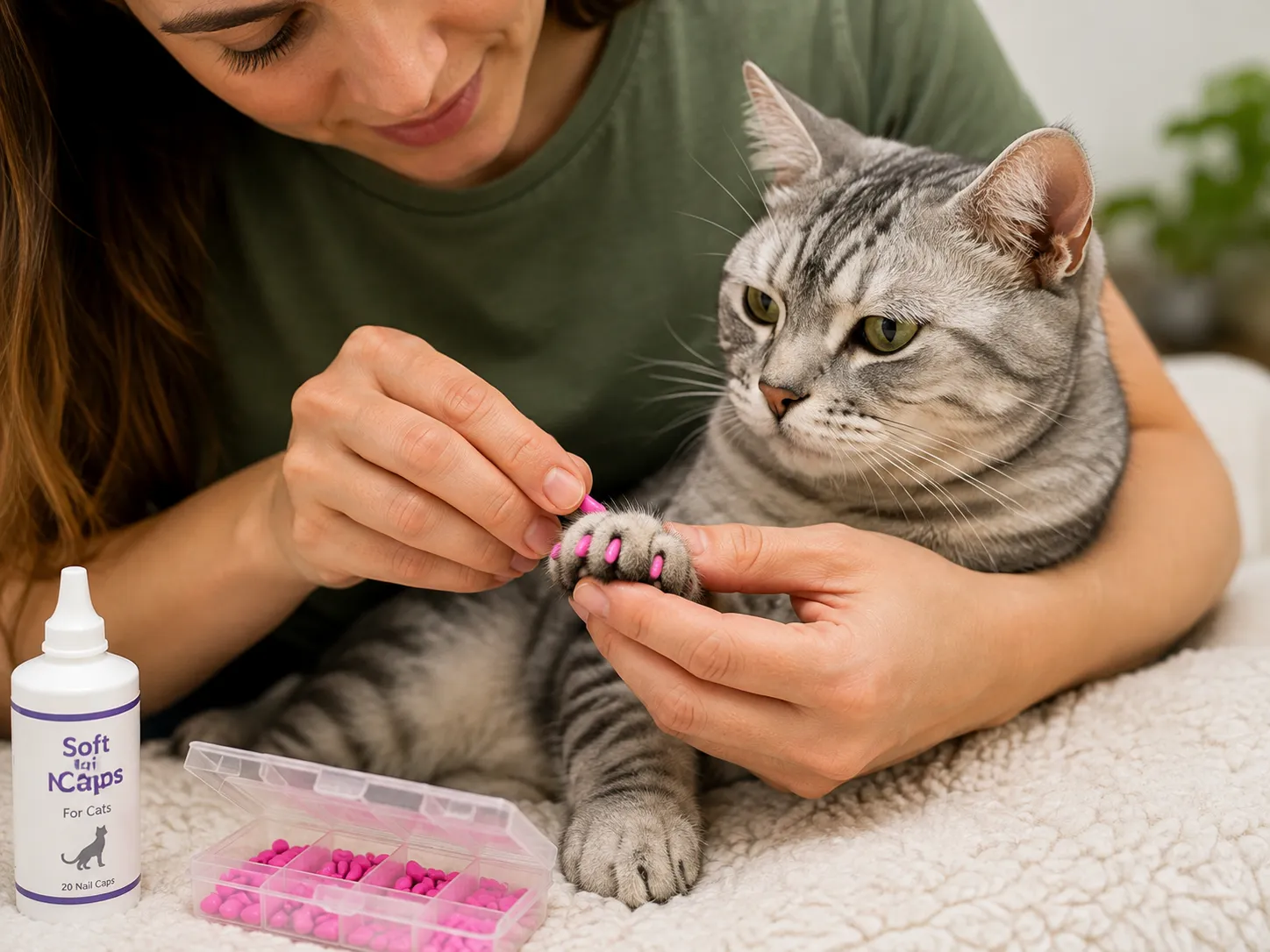
6. Consider Soft Nail Caps Soft, vinyl nail caps glue onto your cat's claws and blunt the damage from scratching, typically lasting 4–6 weeks before needing replacement. They're a humane, vet-recommended alternative that lets your cat go through the full scratching motion without harming furniture. ✅ Shop Now — Soft Nail Caps for Cats
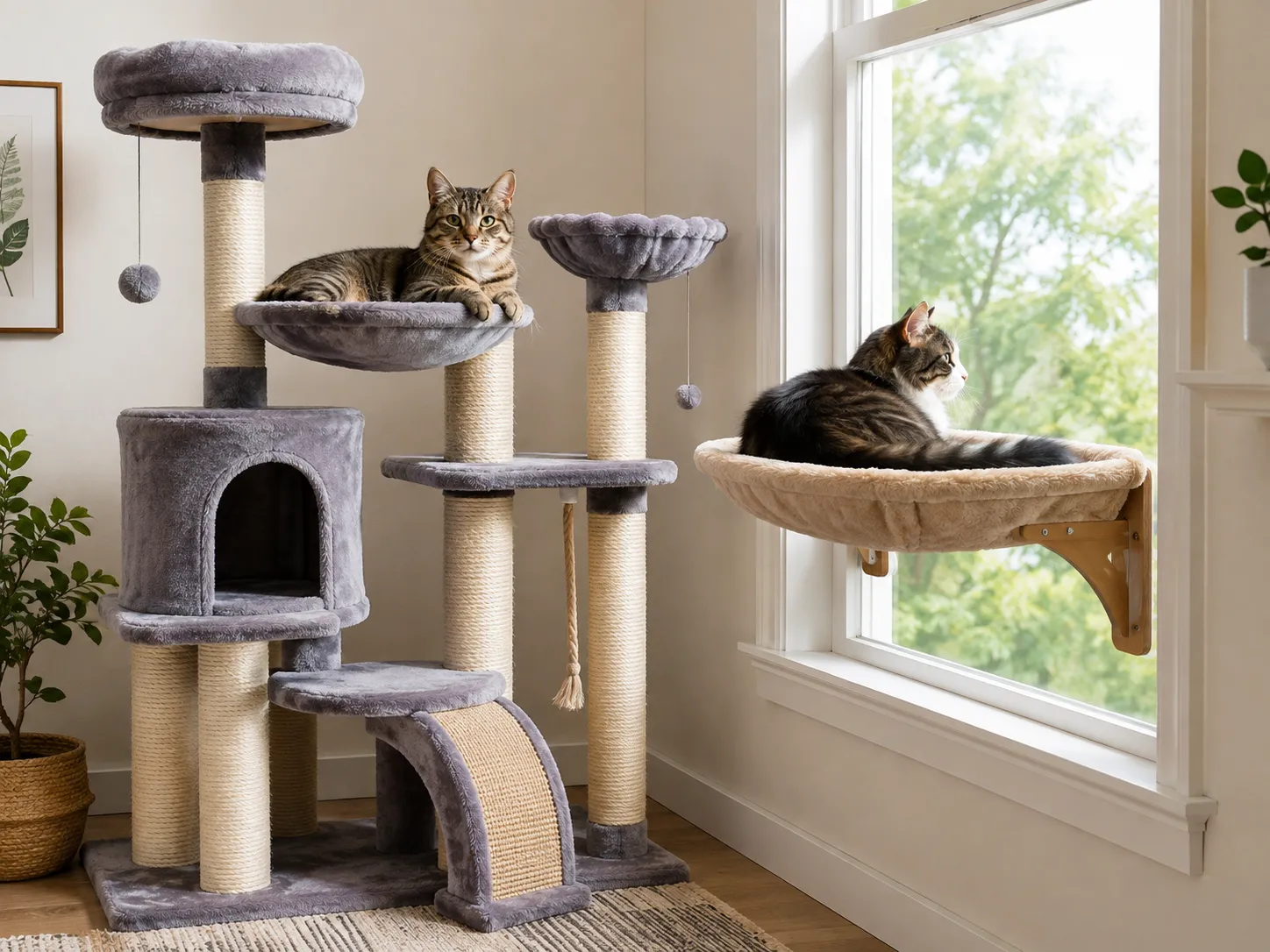
7. Address Underlying Stress or Anxiety If scratching increases alongside signs of stress — like a recent move, a new pet, or a change in routine — the behavior may be anxiety-driven rather than habit-driven. Extra playtime, enrichment like cat trees and window perches, and consistency during transitions can help. In more persistent cases, vets may recommend calming supplements or a consult with a veterinary behaviorist. ✅ Shop Now — Cat Tree & Window Perch
What NOT to Do
- Don't declawing — it's an invasive amputation-level procedure, not a simple nail trim, and is discouraged by veterinarians.
- Don't punish or yell — this typically increases stress and can worsen the behavior instead of stopping it.
- Don't rely on scent deterrent sprays alone — vet behaviorists note these are often not very effective and can be aversive to some cats.
FAQ
1. Why does my cat scratch furniture instead of their scratching post? Usually because the post isn't in the right location, material, or height. Try moving it closer to the furniture they already target, and offer a different texture like sisal or cardboard.
2. Is declawing a solution for furniture scratching? No. Declawing is a painful, invasive surgical amputation, not a simple nail trim, and is strongly discouraged by veterinarians as a behavioral fix.
3. Do scratching deterrent sprays actually work? Results are mixed. Veterinary behaviorists note that commercial sprays aren't always effective and may be unpleasant enough to cause stress in some cats.
4. How often should I trim my cat's nails? Every 2–3 weeks for most cats, though cats with certain conditions like hyperthyroidism may need more frequent trims since their nails grow faster.
5. Can stress cause increased scratching? Yes. Changes in routine, a new pet, or a new family member can trigger stress-related scratching. Pheromone diffusers, added enrichment, and consistency can help ease the transition.
Final Thoughts
Scratching isn't a behavior problem to eliminate — it's a natural need to redirect. With the right combination of scratching posts, nail maintenance, and a little patience, most cats adjust within a few weeks without any punishment or drastic measures.
Looking for scratching posts, nail caps, or calming products that actually worked for other cats? Real cat owners share honest product reviews on PetRaters.com, so you can skip the trial and error.
✅ Shop Now — Browse top-rated scratching posts & cat trees
Disclaimer: This article is for informational purposes only and is not a substitute for professional veterinary or behavioral advice. Consult your vet if scratching behavior changes suddenly or seems linked to pain or anxiety. Some links may be affiliate links.